THE MIĞIONDÀRA: in Migiondo the magic of autumn is renewed
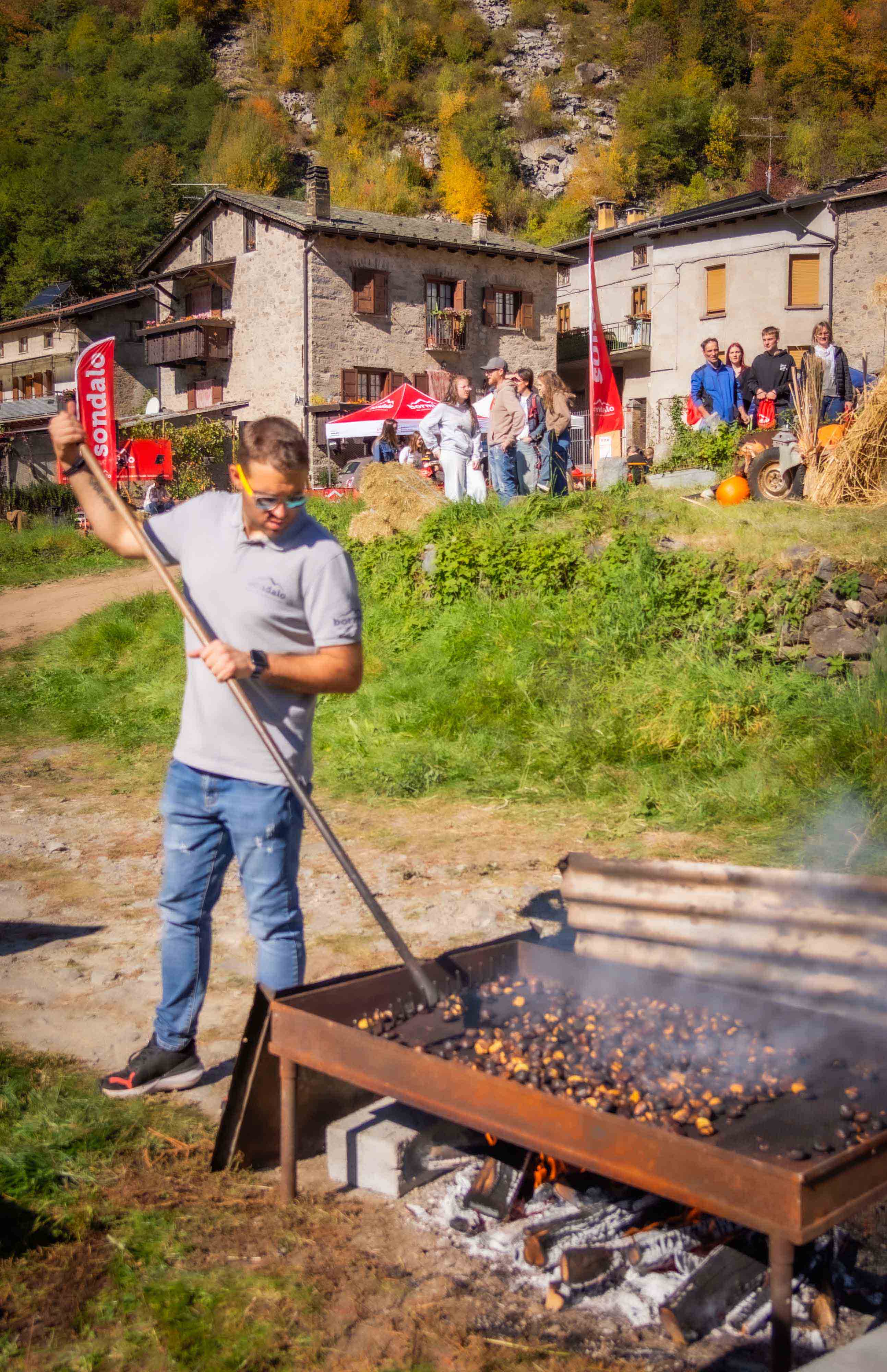
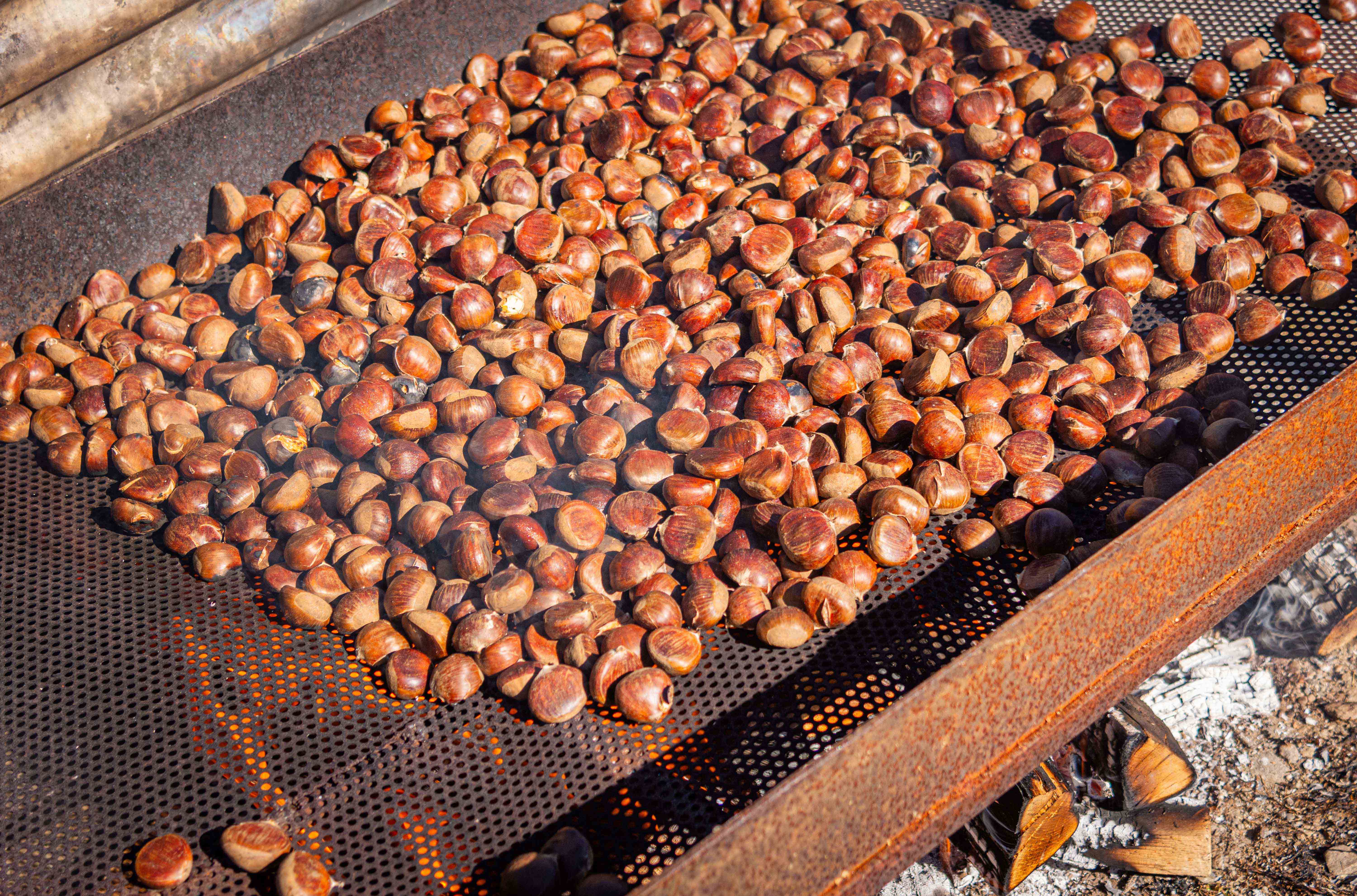
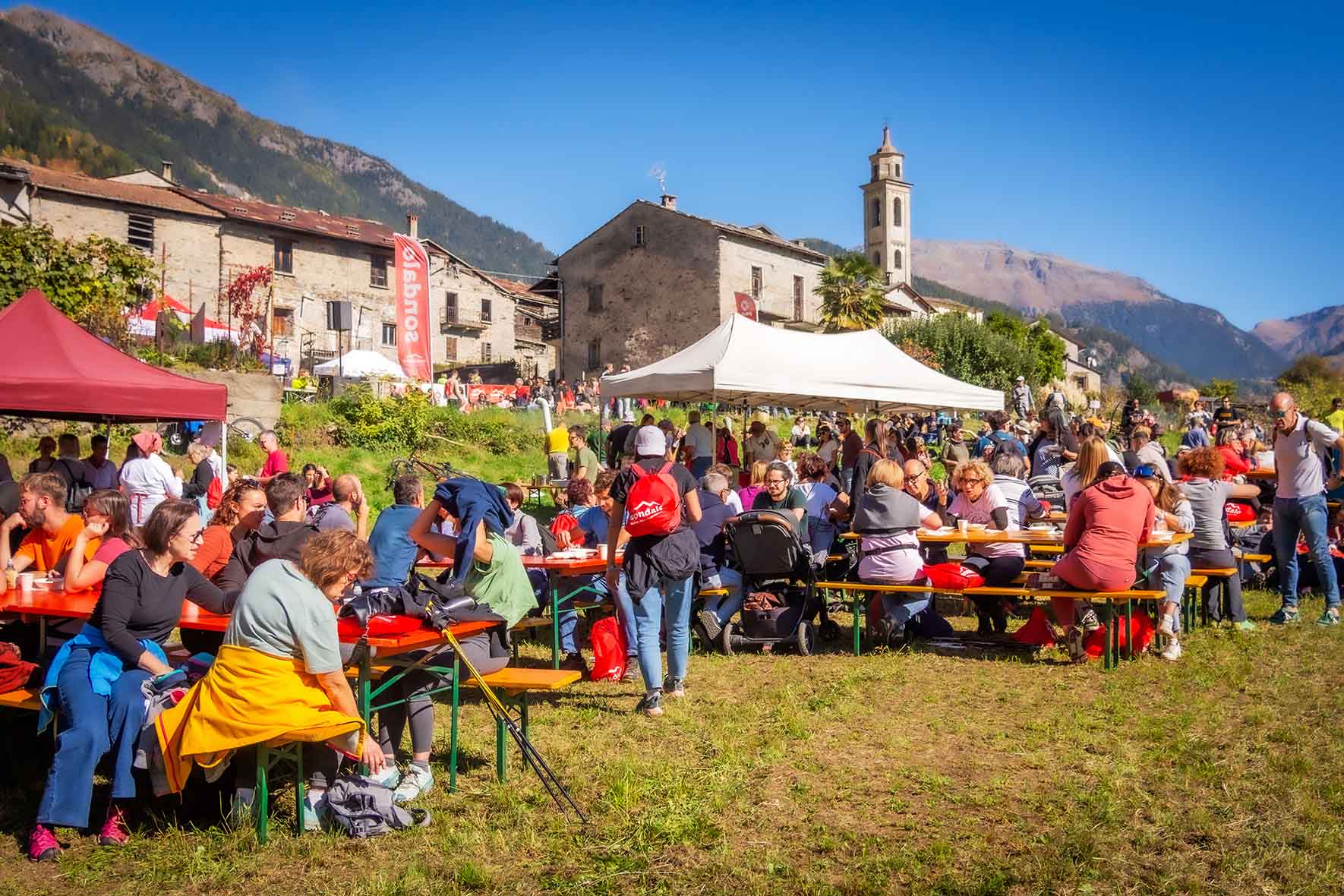
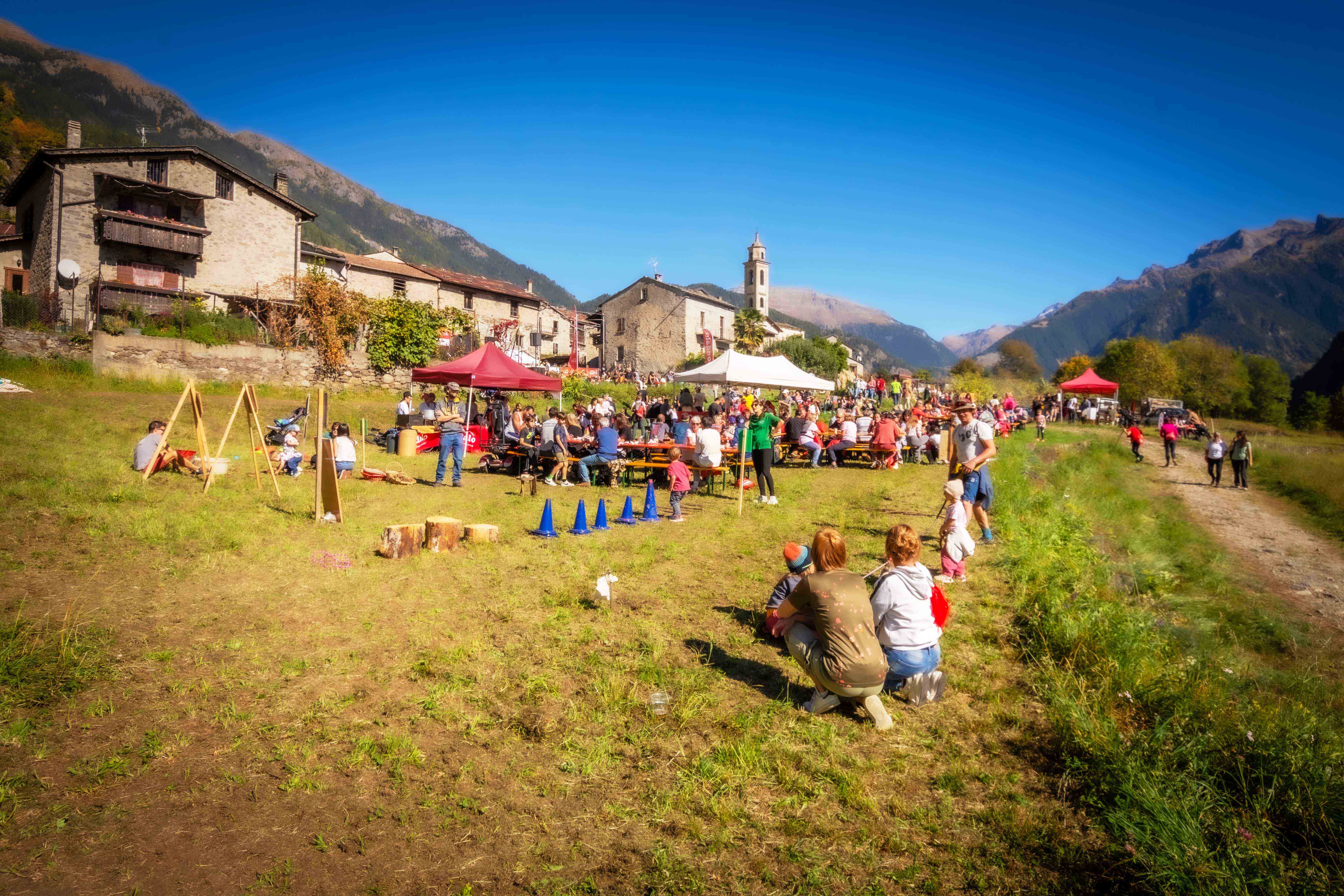
On Sunday, October 12, the hamlet of Sondalo experienced a special day with the fifth edition of “La Miğiondàra – Chestnuts and autumn delights”, an event that this year was intertwined with the Trekking in rosa, as a sign of support for the month of prevention. An appointment that, year after year, continues to grow in popularity, becoming one of the most anticipated events in Valtellina for autumn festivities. This is evidenced by this year’s numbers, with the 500 BontàPass expected, all sold out, and over 1,000 people attending the celebration, who chose to experience the authentic atmosphere of the rural village of Migiondo. Describing the emotion of the day for APT Sondalo was Renato Ciaponi, journalist, agronomist, and director of the blog “Il Gusto del Gusto”, who emphasized how events like this preserve the true spirit of the mountains: hospitality, traditions, flavors, and friendship.
--------------------------------------
The departure with the Miğiondàra in pink
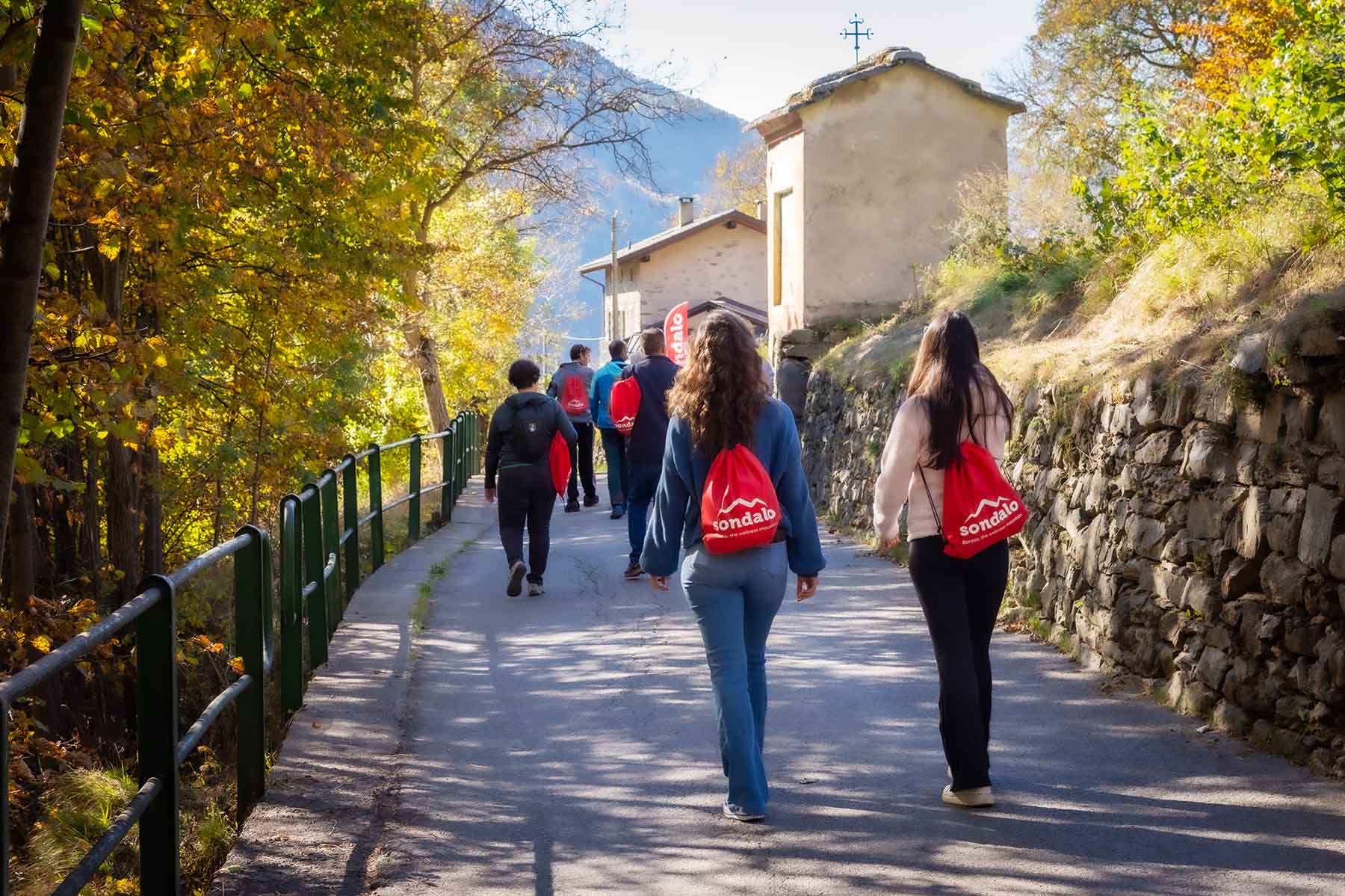
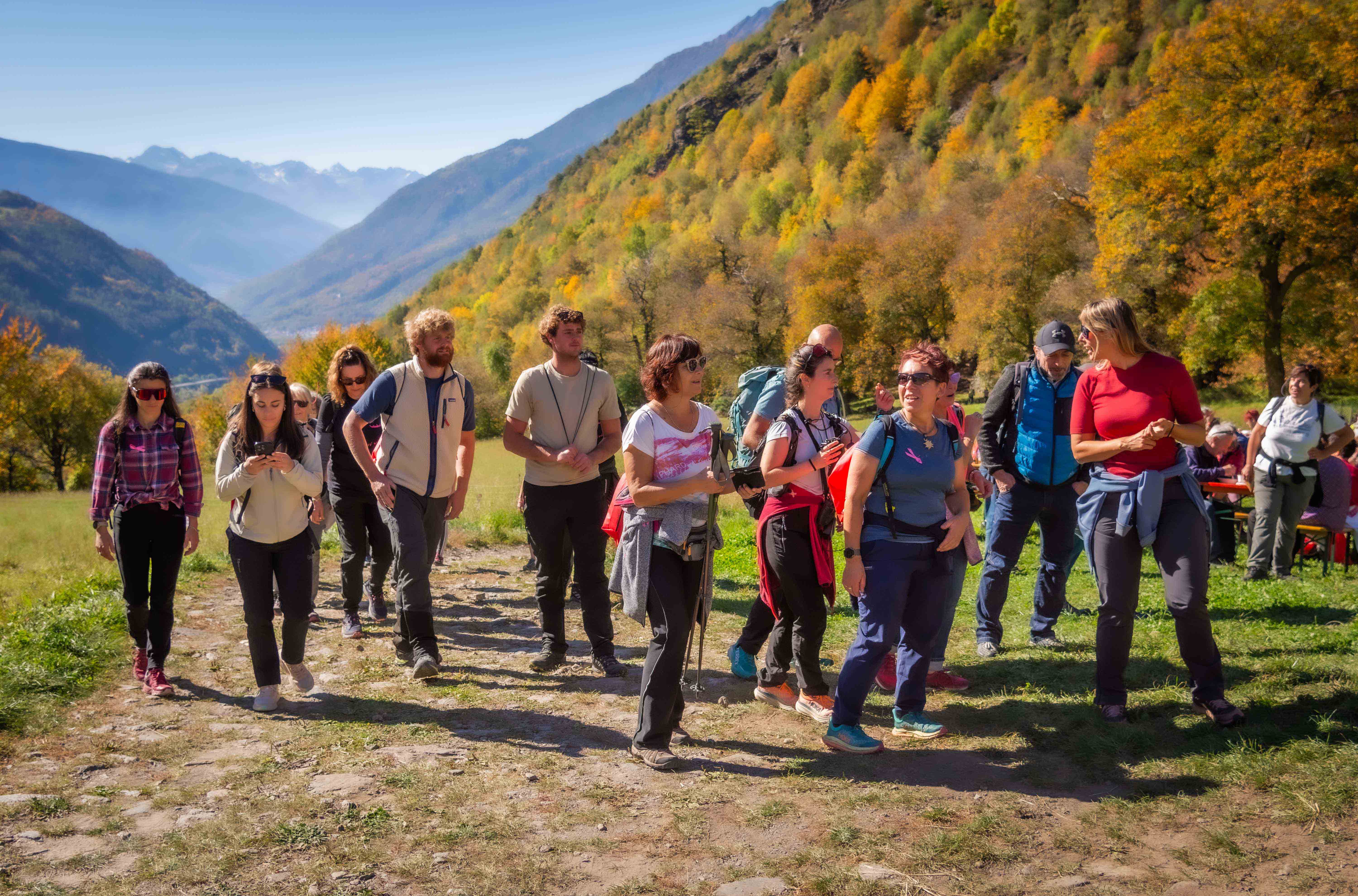
On Sunday, October 12, a new edition of the Miğiondàra was held, the event that takes place in Migiondo, a characteristic hamlet of Sondalo, linked to the flavors of autumn. This year, the festival was inaugurated by the Trekking in Rosa, now in its third edition, for the month dedicated to prevention, which began at the Municipal Plaza, with the distribution of backpacks to 50 participants. The event is organized by the Municipality of Sondalo and the Amazzoni association; welcoming remarks were made by Mayor Ilaria Peraldini along with the presidents of APT Sondalo, Maria Gobbi Frattini, and the Amazzoni association, Giuseppina Osmetti.
Five kilometers on a new route: we start in the direction of Grosio along the Sentiero Valtellina, then climb towards the ancient village of Migiondo along a comfortable path that crosses chestnut groves with centuries-old trees, dry stone walls, and recently restored and enhanced terraces. An experience enriched by the presence of Mountain Media Guide Mirko Tomerini and naturalist Benedetta Sala, who guided the participants through history, curiosities, and practical advice, especially on how to improve one’s well-being with the help of nature.
Walking on the Sentiero Valtellina, to our right are steep slopes that tell a long story of landslides: the oldest one is believed to have broken away from the top of Monte Fò over 9,000 years ago, an impressive landslide that filled the valley bottom, blocked the course of the Adda River, and created a very deep lake. Over time, the Adda River and the Migiondo stream resumed their course, deeply carving the cone that is still visible today from the opposite slope or even from State Road 38, near the Boscaccia area.
The stops are various, but the most surprising one is at the border with the Municipality of Grosio. After crossing the Adda on the iron pedestrian bridge and a wide gently ascending path, an unexpected terraced space opens up: about twenty tall and long stone walls that create wide terraces and rise, narrowing, until they disappear among the last chestnuts. Their grandeur and the care in their construction impress: squared stones, some large, embedded with precision in an elegant architectural game.
Even the terrace floor is fascinating: very long, flat, about ten meters wide. The large spaces communicate with each other via a spacious pathway that rises in steps “cutting” through the tall walls. A very convenient communication route, protected by continuous dry stone walls set at angles with the main walls. Occasionally, there are also steps with shelf-like risers that, higher up, replace the central staircase.
Considering the toponym “Castel,” it is plausible that in ancient times these terraces were intended for vine cultivation or other agricultural productions for the castle of Grosio. It is more certain, however, the layout we see today, the result of an enormous work carried out between the end of the 19th century and the beginning of the 20th century by a wealthy gentleman who lived in the house still present at the center of the terraces. It is said that the “padroncino” hired several workers, whom he called “slaves,” and that if they ever entered his house, they were required to do so barefoot.” Then abandonment. Today, however, the complex is once again showing its beauty thanks to a project by the Municipality of Sondalo, supported by regional funding: complete cleaning of the area, preservation of healthy chestnuts in the upper part, and the introduction of high-quality chestnuts in the newly restored terraces.
The journey resumes in the woods, with our guides tirelessly answering questions. Amid practical advice and reflections on the environment that surrounds us, the spectacle of foliage, just beginning these days, ignites the branches in yellows, coppers, and reds. The colors stand out when the sun filters through the leaves and illuminates the path; even more so in the final stretch, when arriving in Migiondo greets us with the warmth of light and the rustling of dry leaves underfoot.
The last stop, in front of an ancient chestnut tree, “...recharge the energy of nature, for our well-being...” says Benedetta, and the embrace of the great chestnut becomes for some the final act of this journey before starting the other path, that of taste that the many volunteers from various associations have prepared.
The taste route
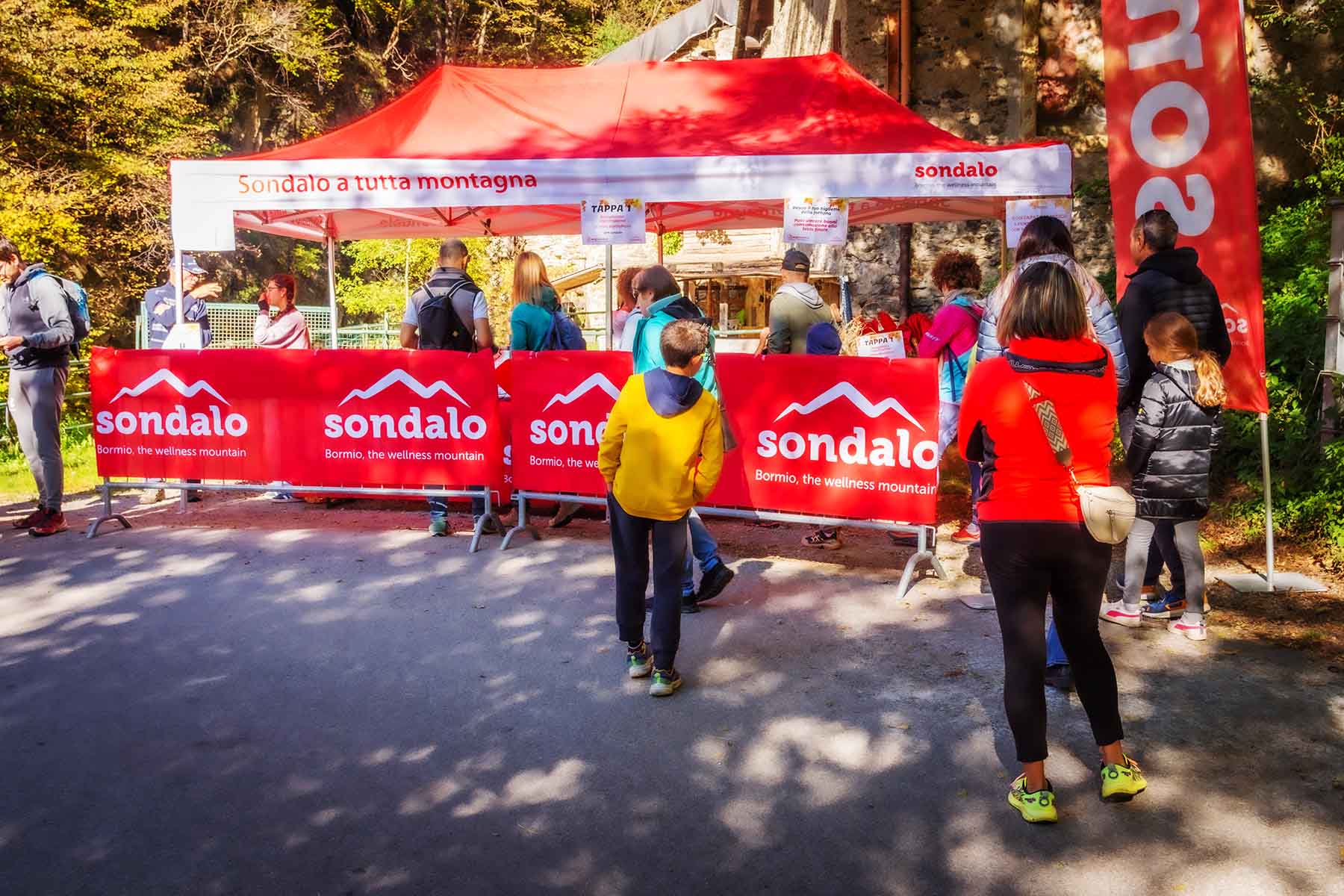
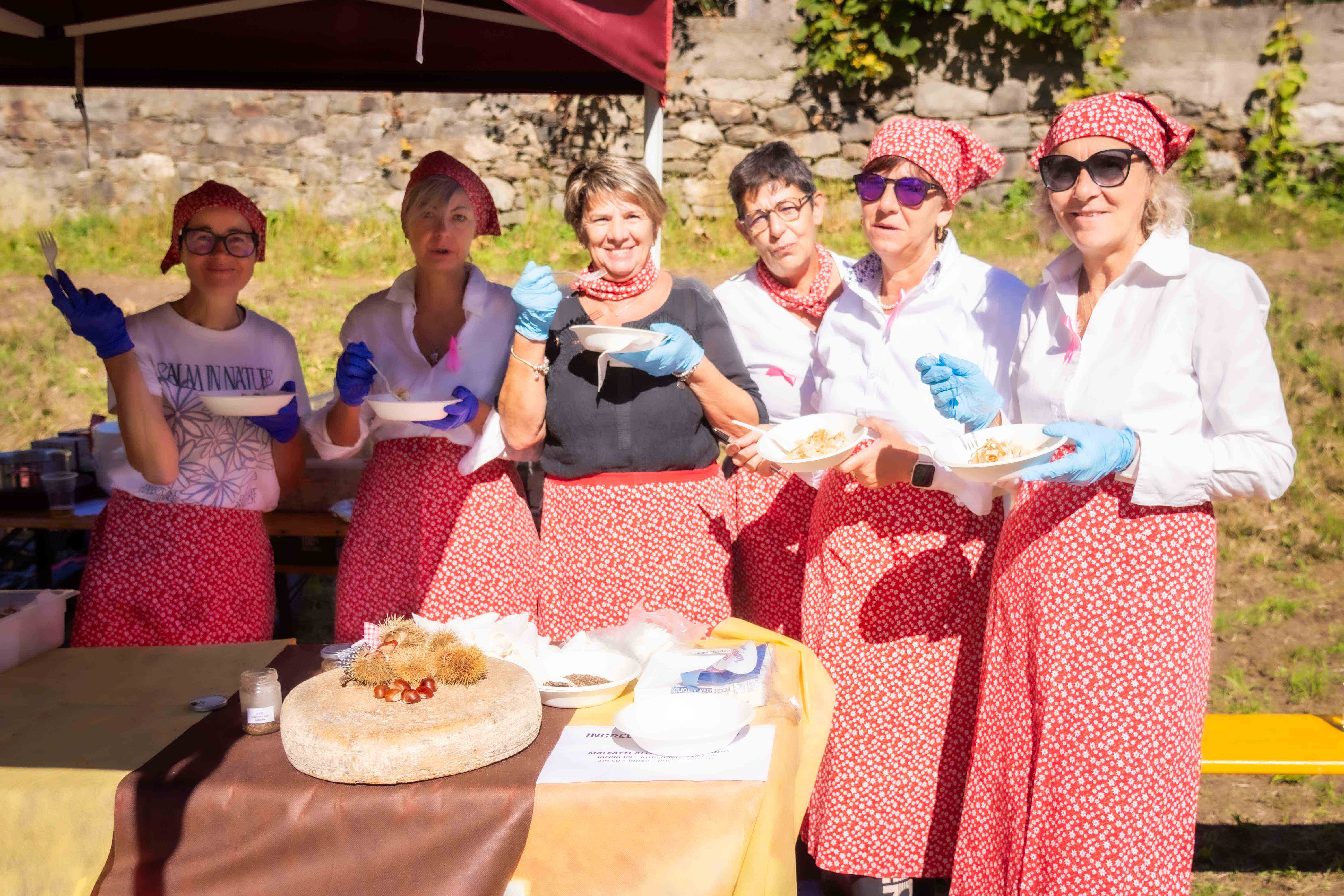
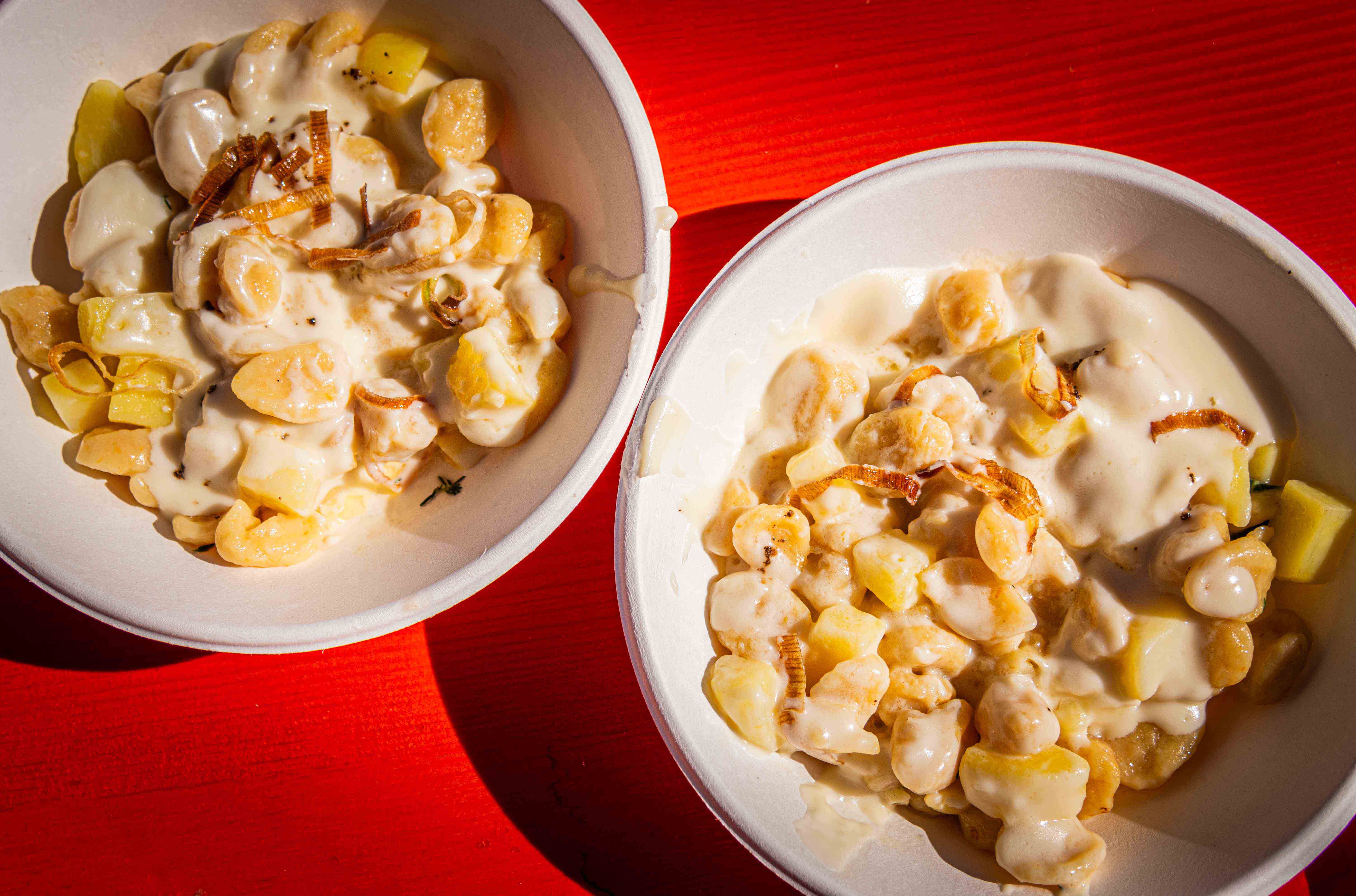
It is 12:30. After the pleasant walk, hunger kicks in, so I decide not to follow the classic path but to stop immediately to taste the two main dishes. “Polenta with lughènega buìda” prepared by the sports group of Sondalo and “Malfatti with pumpkin and Casera fondue and leek”. The portions are generous: it’s better to choose just one, leaving some space for the many autumn sweets that the Bontàpas promises.
I am intrigued by that leek with Casera: two different flavors chasing each other. And here I am at the table of the Cognate, where chef Remo skillfully tosses the malfatti with hypnotic manual skill. I take a seat on a bench and savor the softness of the gnocchi and the crunchiness of the thin strips of leek that crown them.
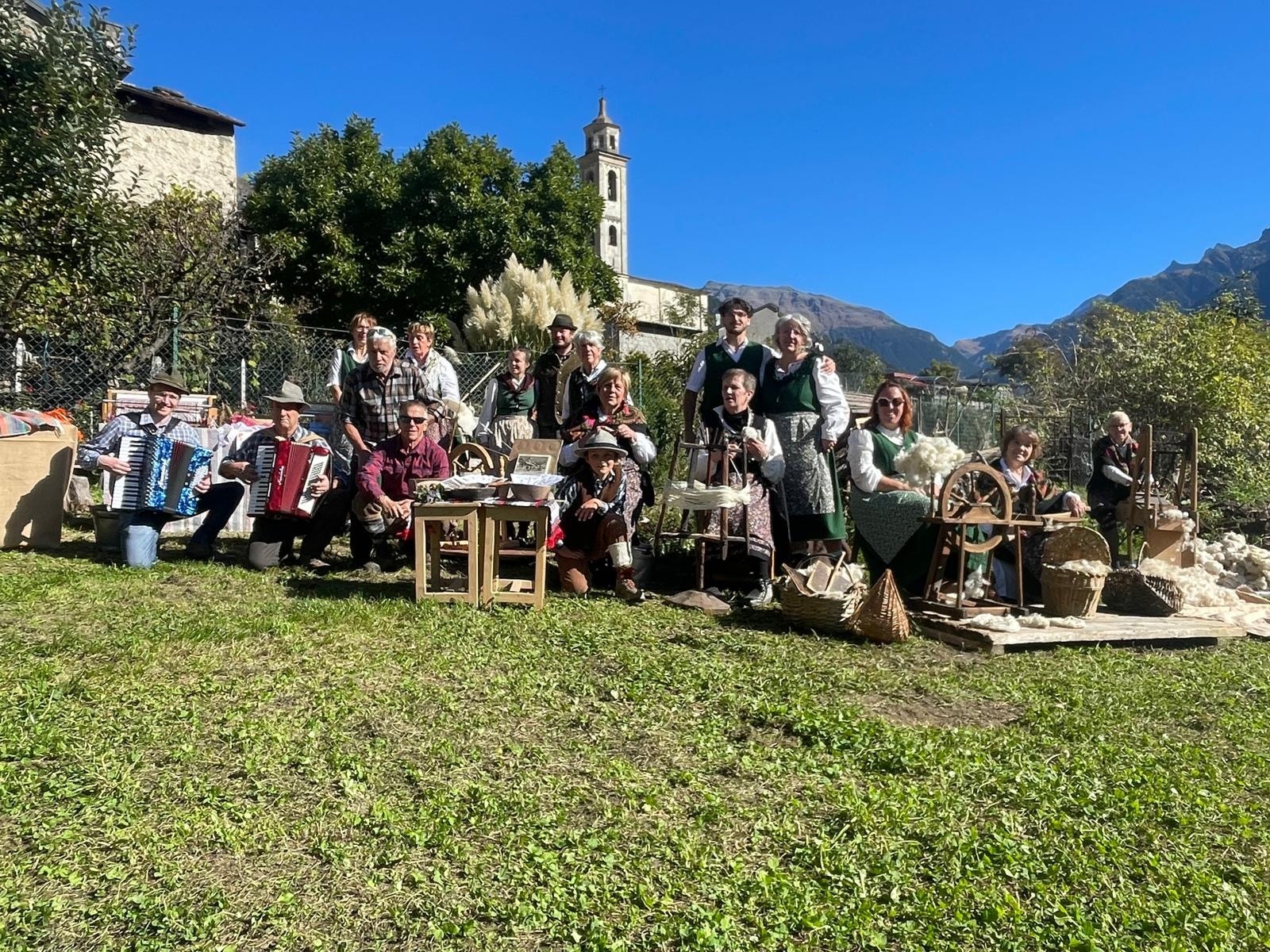
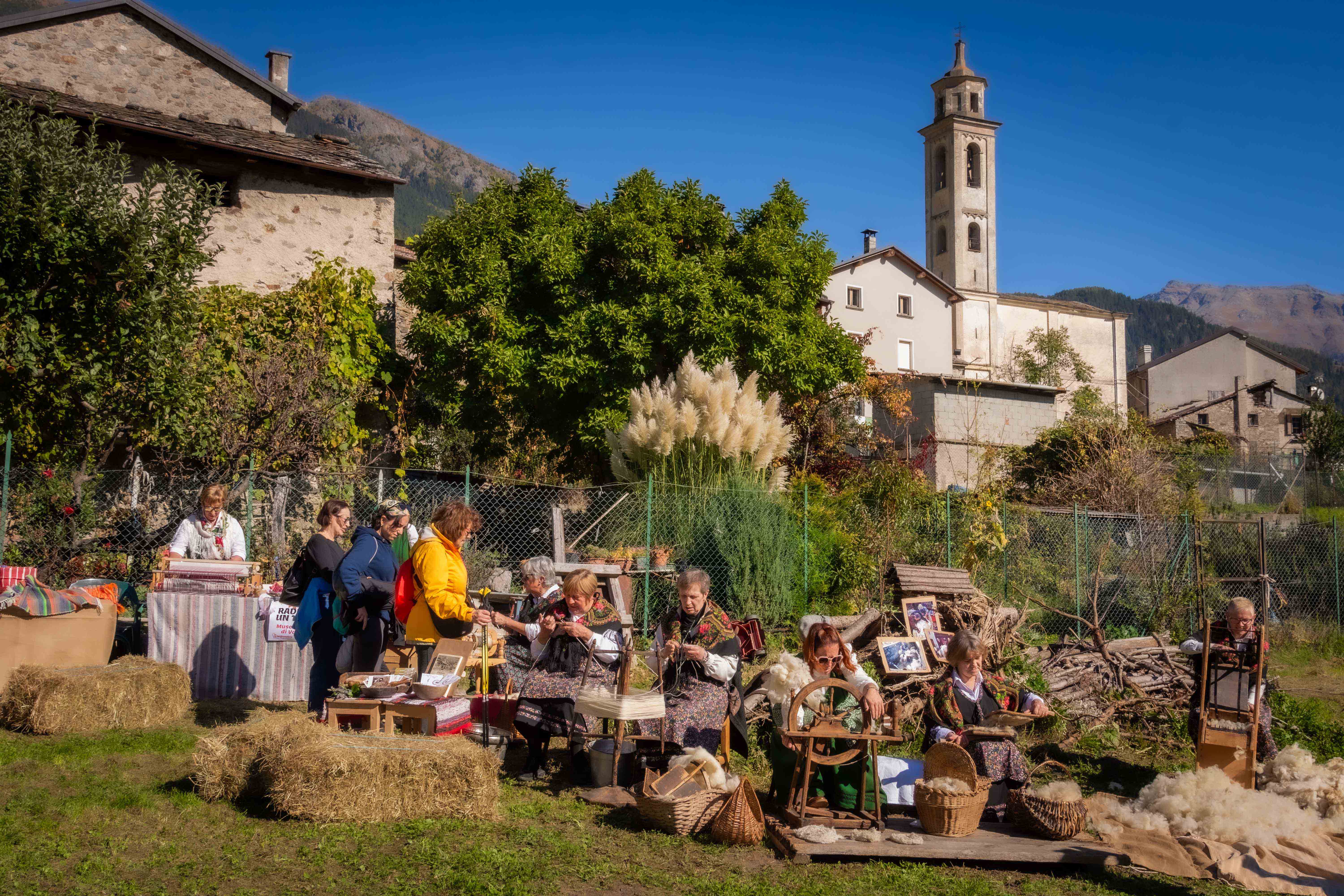
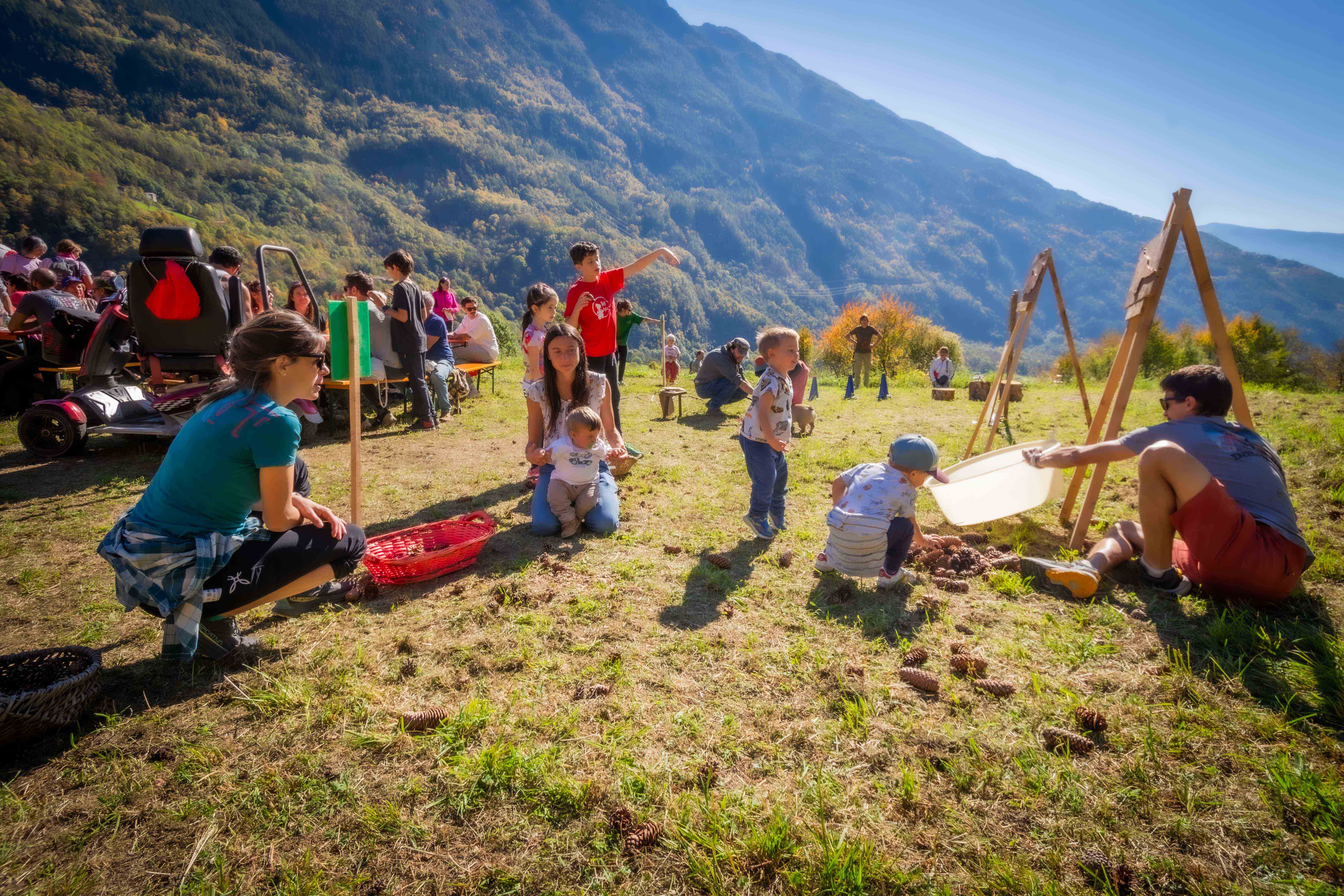
Not far away, Marco has set up old-fashioned games made of wood and creativity: memories of a simple peasant life, when it took very little to smile and have fun. My gaze darts to the space of the Vallivo Museum of Valfurva. I think of him, maestro Mario Testorelli, the soul of the museum: a life of research, even with his students, to save objects and memories of alpine culture.
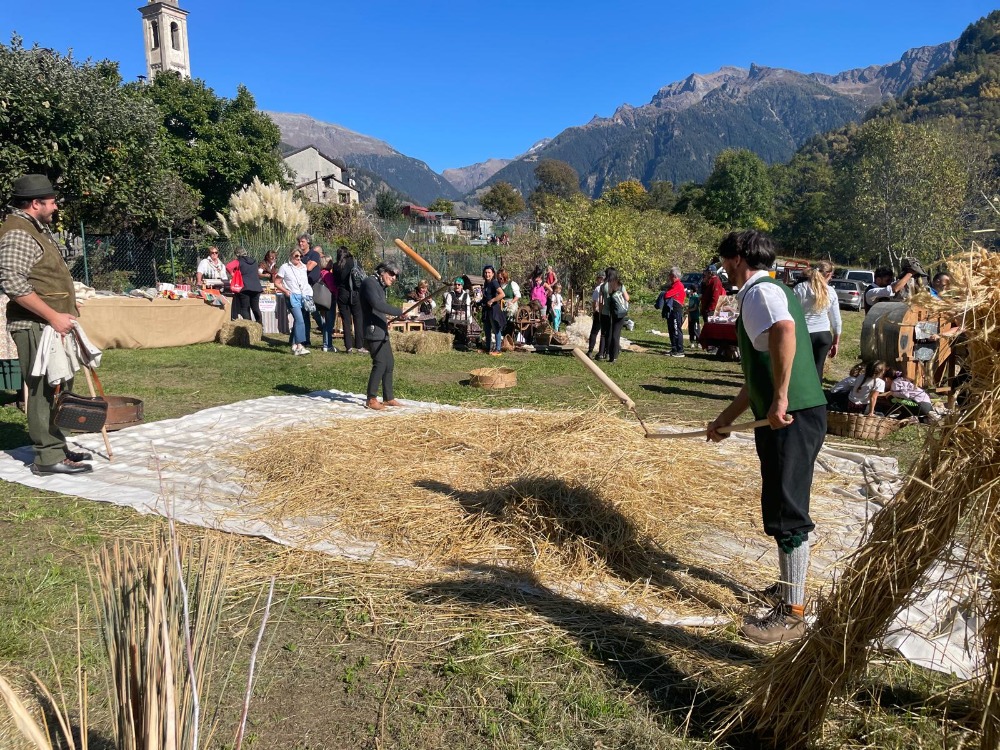
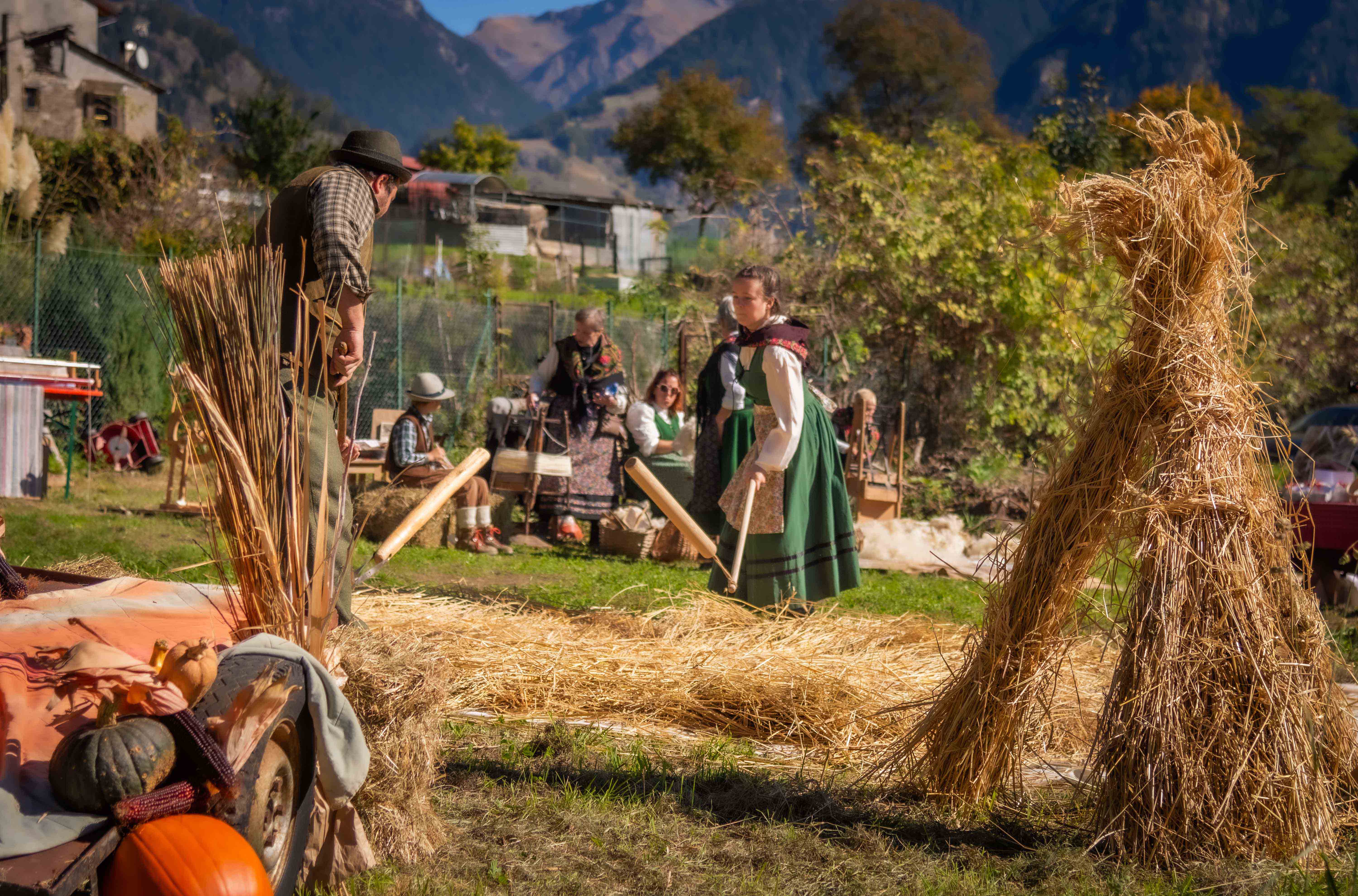
Today, in that wide space, some ancient tools come back to life in the hands of the museum volunteers, in collaboration with the Valfurva Seniors Association: ancient knowledge, peasant ingenuity, the intelligence of hands. Dressed in period costumes, they “interpret” the work of rural civilization from the early decades of the 20th century: the cycle of wool, from shearing the sheep to weaving; the threshing of rye; the production of scànduli, wooden tiles.
My attention stops on a child, about ten years old, in the center of the threshing area, where on top of a large pelorsc he “threshes” the dried rye plants. The precise movements of the fièl impress, and above all, his endurance: for several minutes he doesn’t lose the rhythm. I approach, exchange a few words with the volunteers who tell me about the many activities of the museum. Now, in the same space, a senior lady also moves with surprising agility. I recognize her: it’s Mrs. Ilde, the widow Testorelli. She too is at the Miğiondàra perhaps as a tribute to her husband, perhaps simply out of a desire to remember him, here, where everything speaks of him.
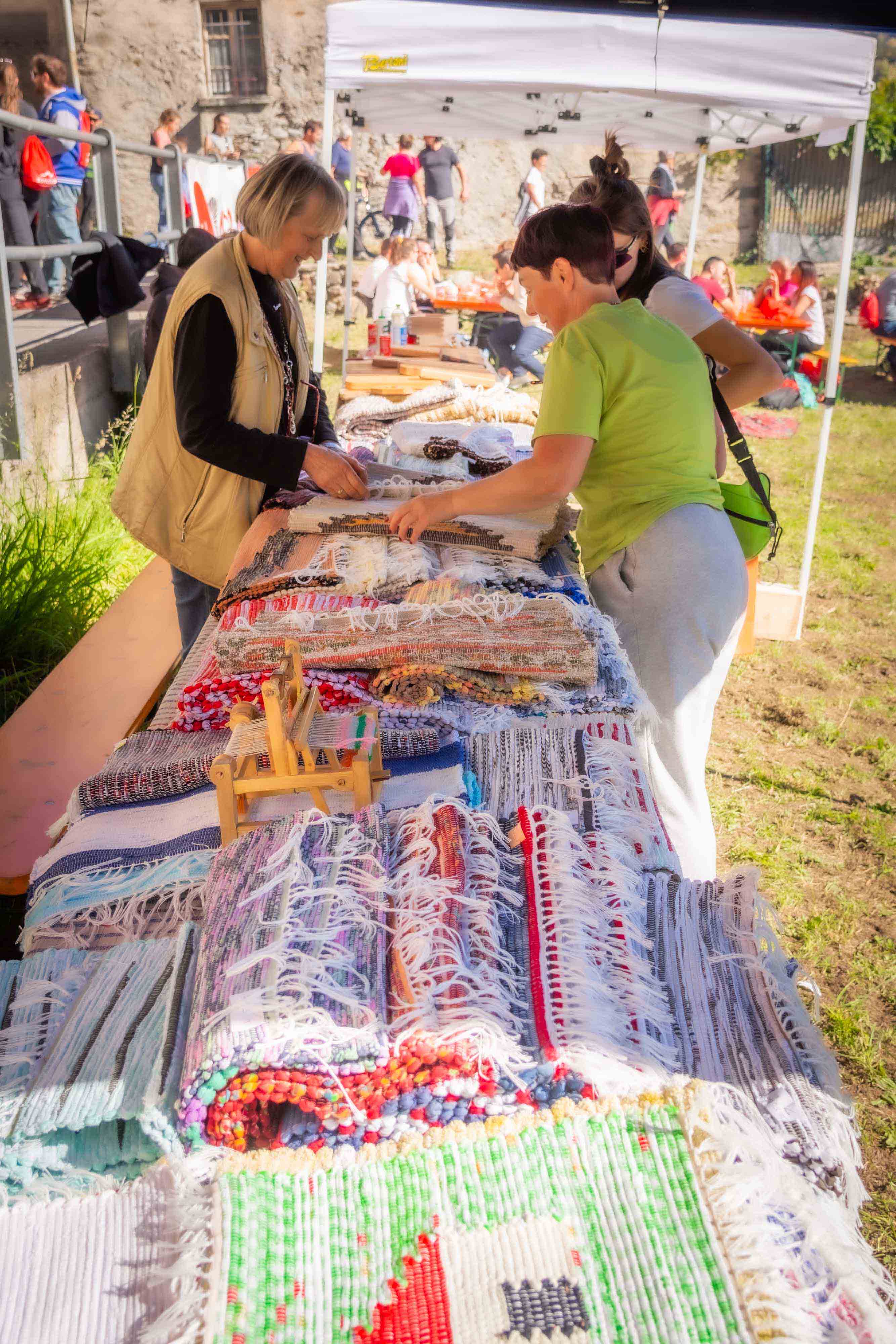
I leave the field and resume the path, not before a stop at Davide’s stand, a young carver from Sondalo, and at the stand of the pezzotti, woven in Sondalo with patience and heart by the volunteers of the “Camerun” project from the school of Sondalo: a touch of tradition and solidarity. The proceeds will go to Don Giusto Della Valle, originally from Le Prese, for missions in Cameroon.
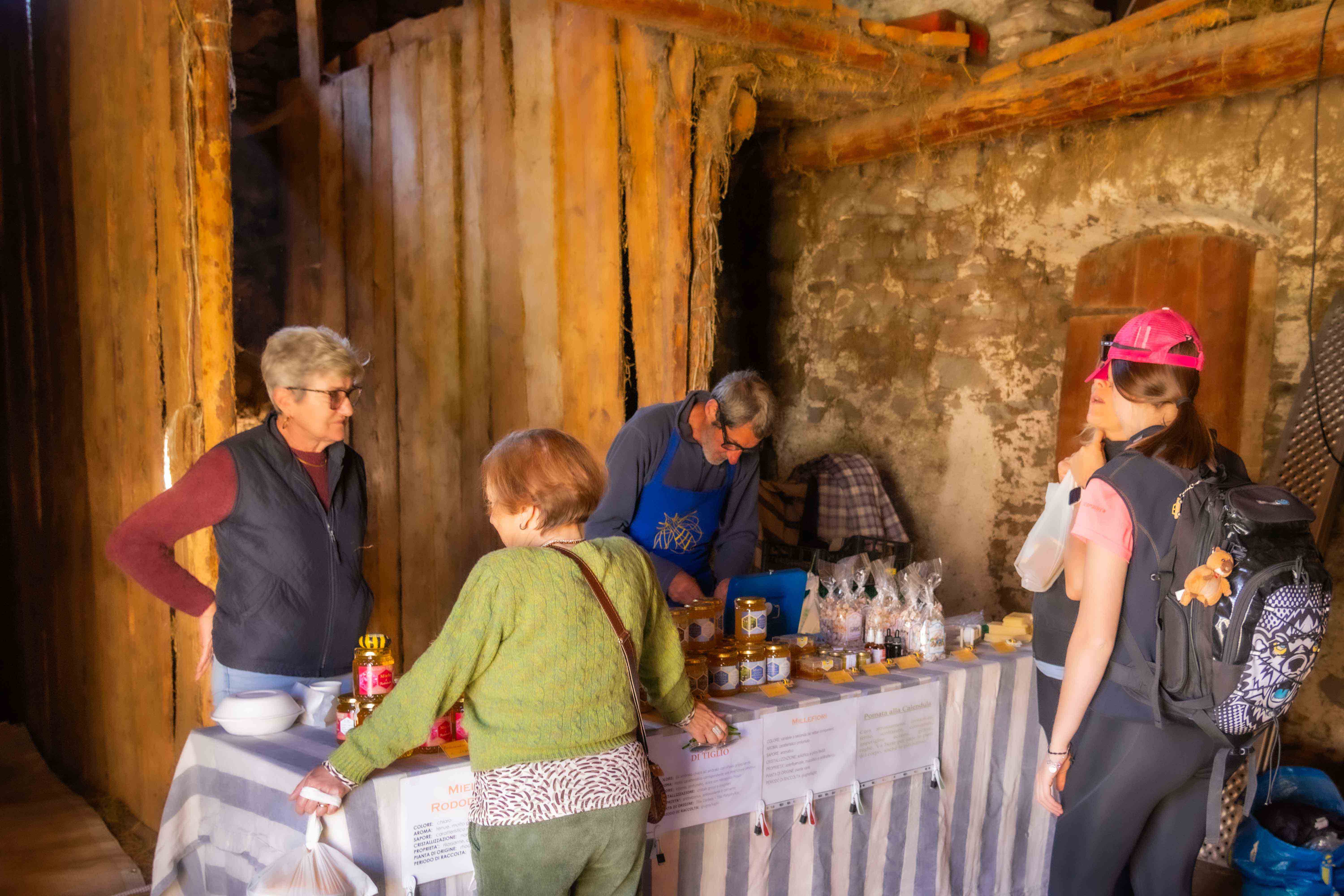
I walk among the ancient houses of Migiondo. A glance at the honey extraction laboratory of Guido Mazzetta’s farm to arrive at the first station where the first sweetness of the day awaits me.
Returning to the Miğiondàra is always a pleasure: there’s always something new, but above all there’s the certainty of quality. A curated food and wine route, recipes in which the chestnut is queen and surprises from edition to edition; the search for authenticity that becomes good product; the professionalism of those who cook; the quiet kindness of the volunteers at work.
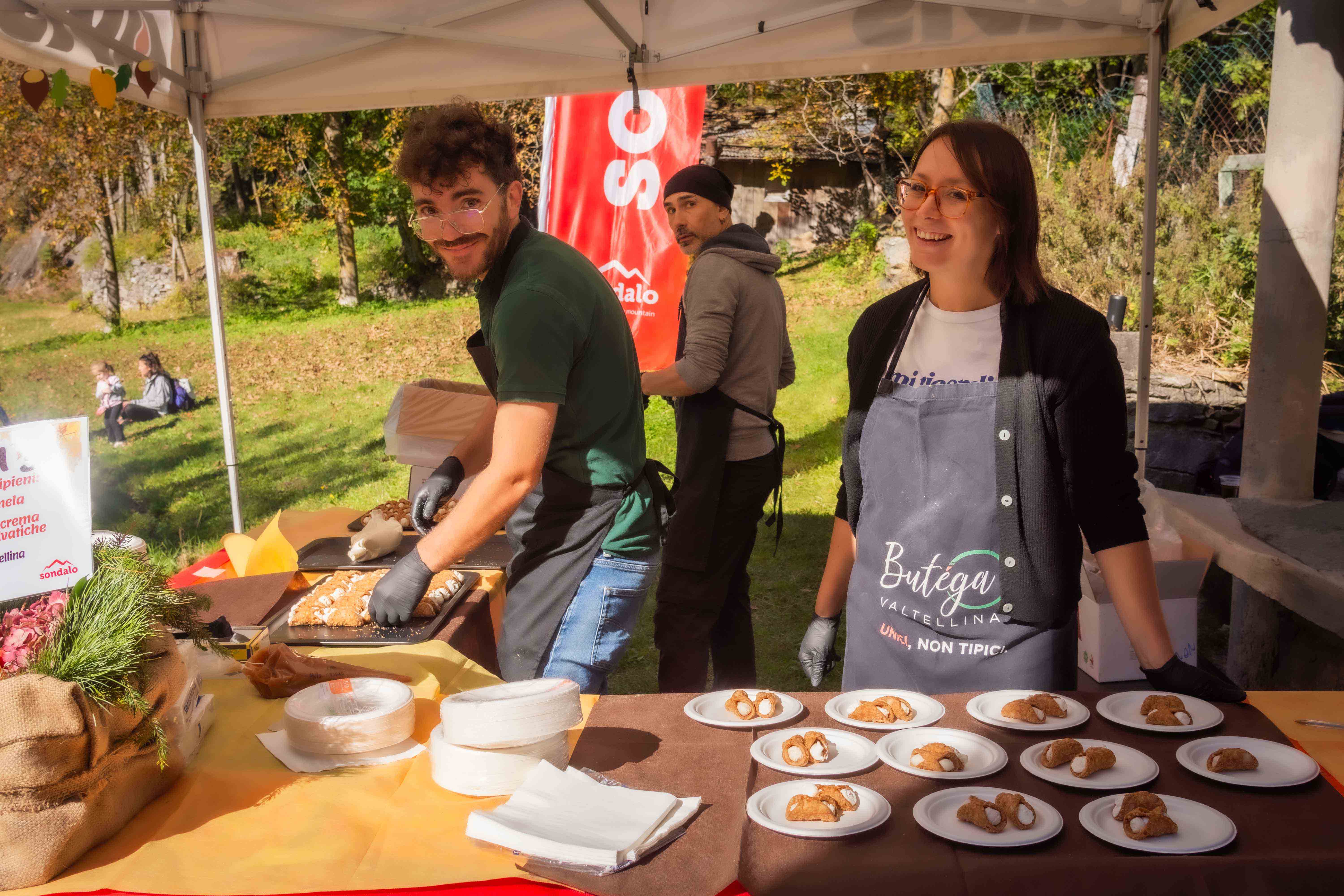
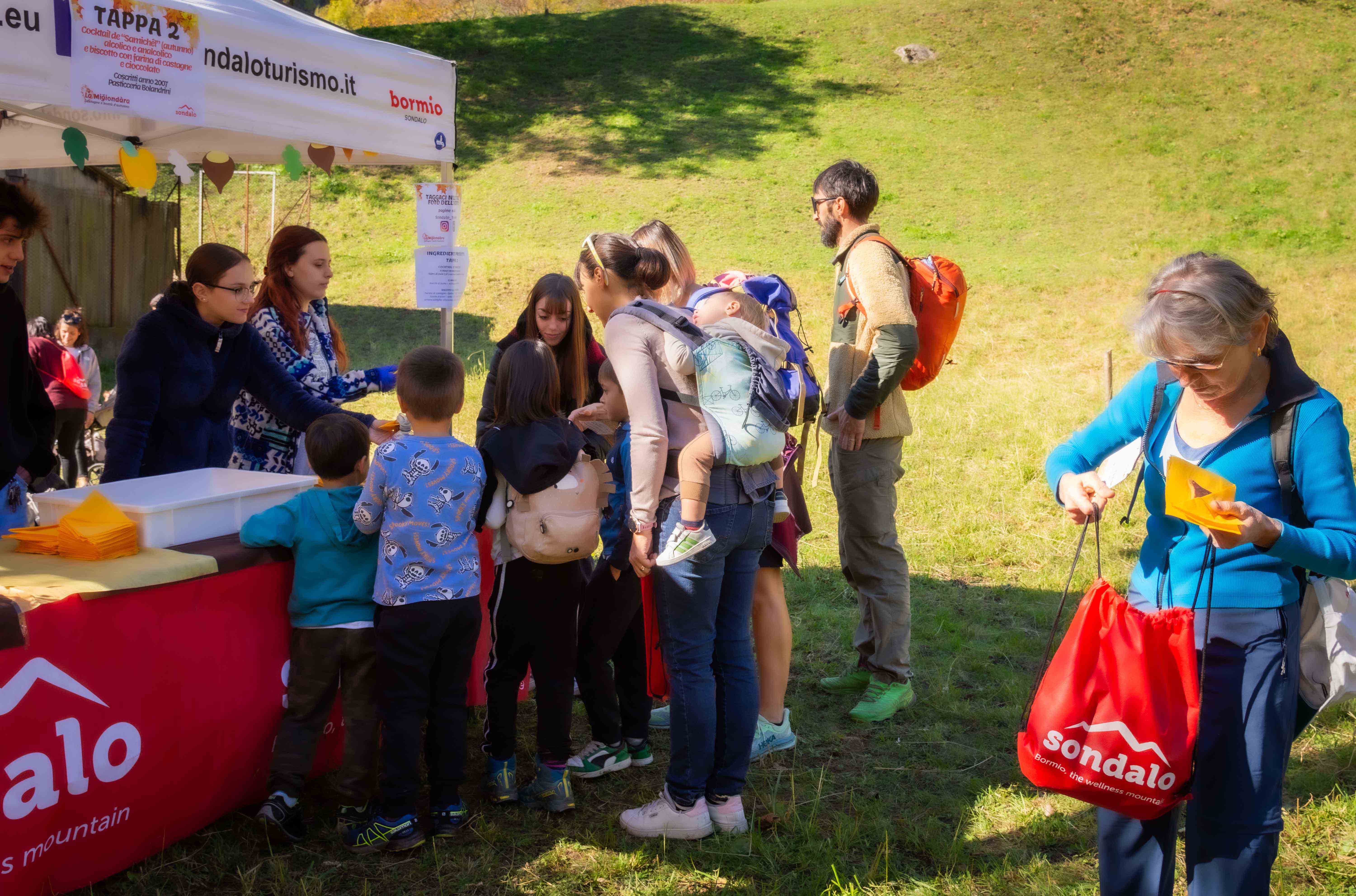
And here I am at the first station. The 2007 classmates welcome me with a smile: Cocktail de “Samichêl” (cider and elderberry syrup) and a chestnut flour and chocolate biscuit, prepared by the Bolandrini Patisserie. A little further on, another temptation: the friends of Butèga Valtellina present this year’s novelty, a double cannoli: ricotta and apple, and ricotta with chestnut cream. Irresistible.
I cross the field and pass in front of the church dedicated to S. Bernardo and the SS. Trinity, a fragment of history that comes from afar: from the open door for guided visits, I glimpse some people listening to Vanda and Graziella. Outside another surprise, the stand of Michela Robustelli of the Cuna agricultural company, with products and a demonstration of beeswax.
But the autumn sweets are not over: here is also the table of Cornàt “sü la préda” con fìch, a traditional dish from Sondalo and Frontale (Associazione Li Simenza Giovani Sondalo). Last year raisins, this year figs. Next? Who knows, it will be a surprise.
One last caress awaits me: tiramisù with marron glacé, prepared and served by the Sgangherati, Associazione Giovani Frontale. Delicious, as always.
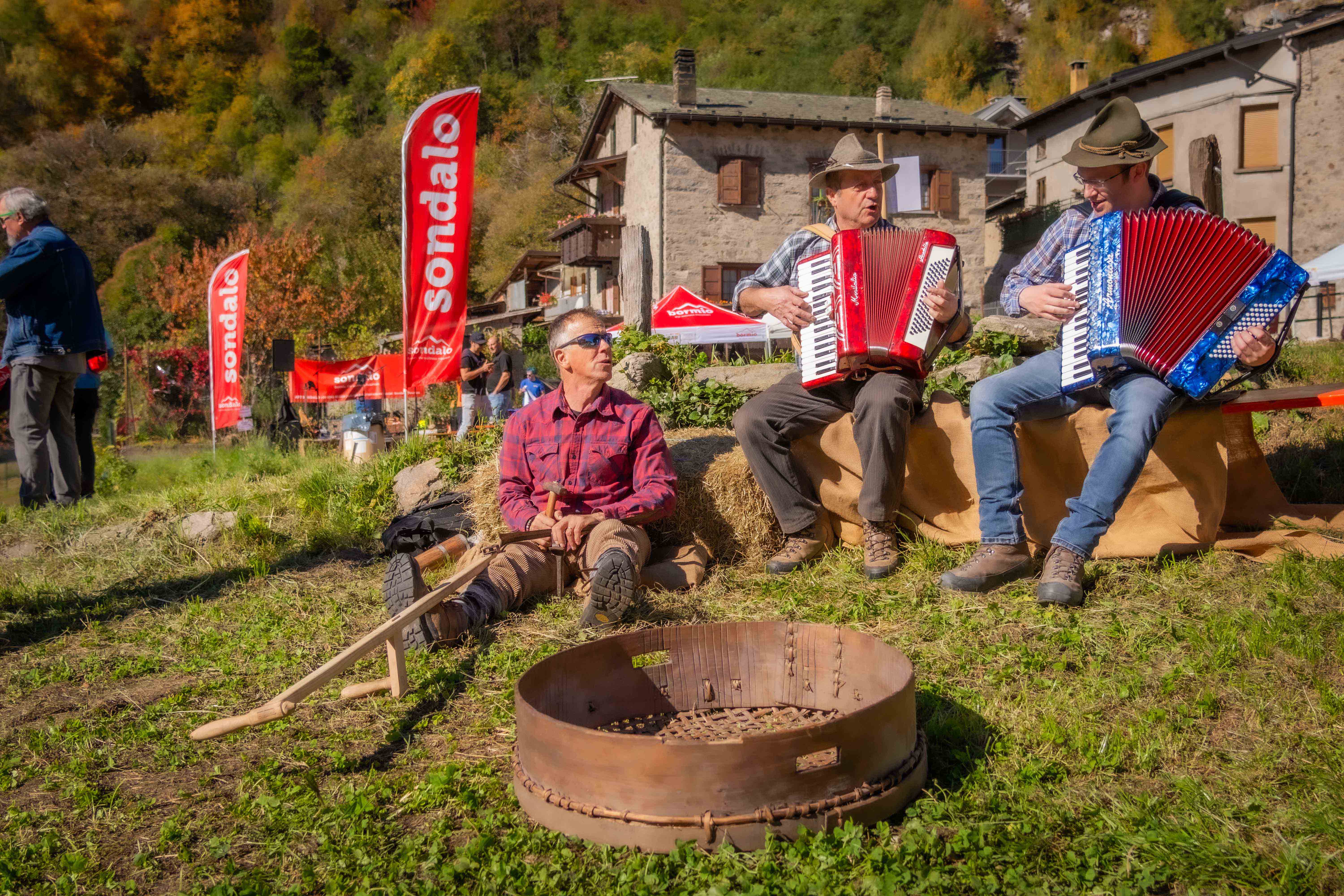
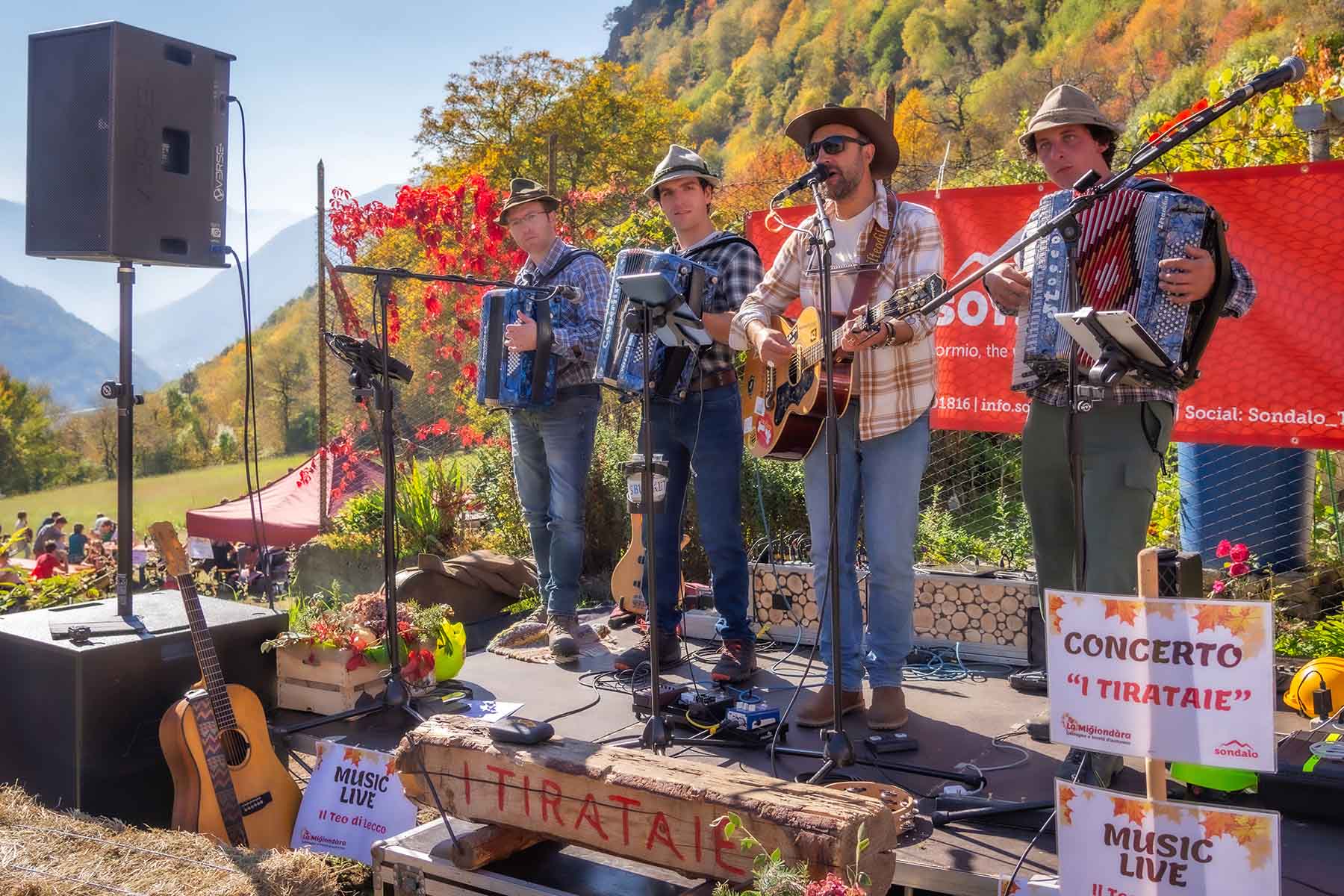
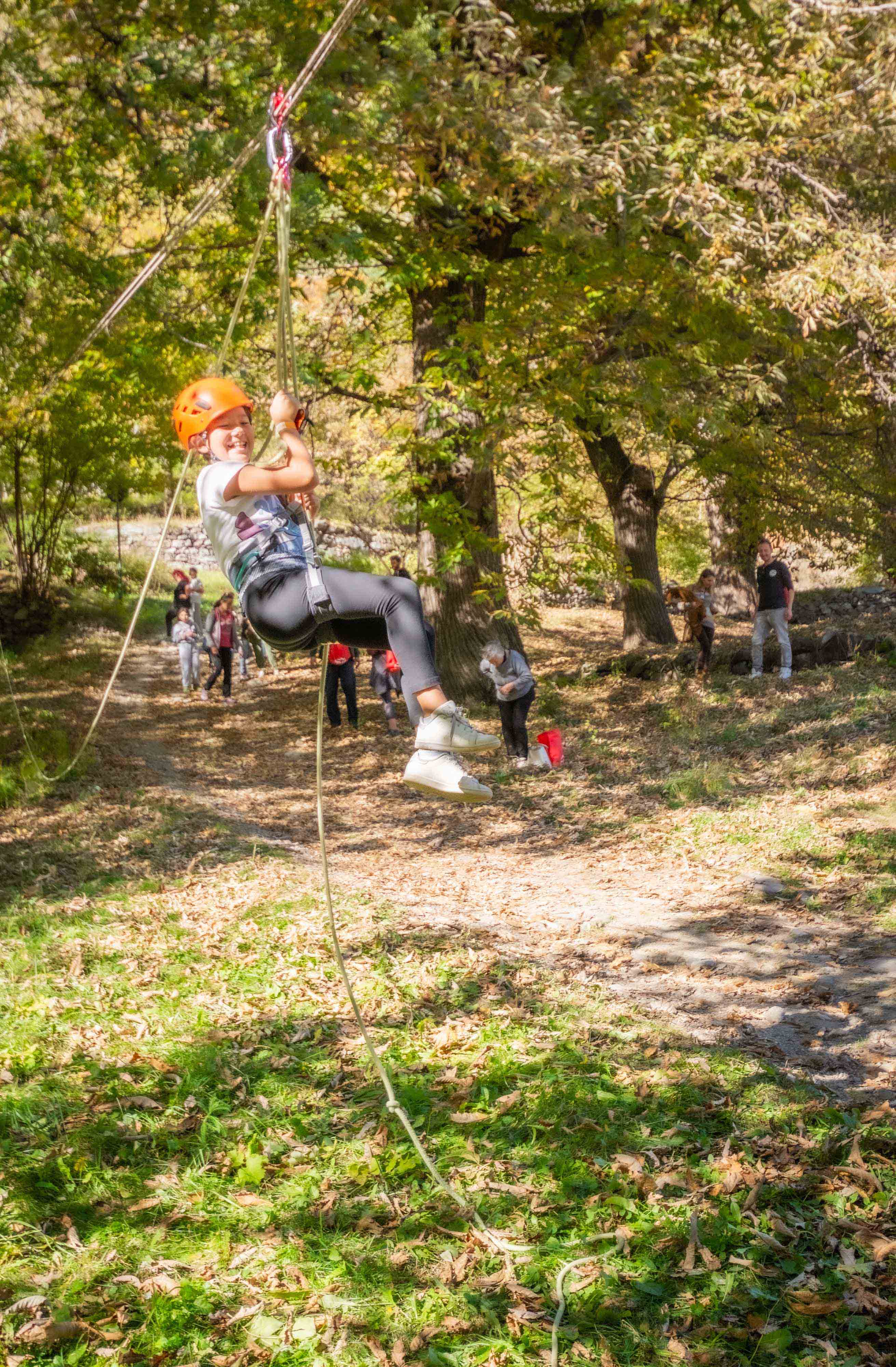
I watch the children having fun on the donkeys from the local agricultural company of Attilio Pozzi, present for the first time, an image that speaks of genuineness and village festivity, further confirming an edition that calls to mind the territory and its people; amidst songs and accordions, I return towards the heart of the party. More music: first Matteo, “Il Teo di Lecco,” warms up the audience with his enthusiasm, accompanied by accordionists on stage; then comes the grand finale with I Tirataie, the Folk&Roll band from the Dolomites, for the first time in Valtellina; an explosion of energy and sympathy, with that touch of irreverence that makes them unmistakable and highly beloved, across the Alps. A final stop to “dirty” my hands with the Brašchēr de Miğiónt, the main dish of the festival from which the Migiondara was born. The Alpini offer a glass of steaming mulled wine, fragrant with tradition. Then, one last look at the woods that descend towards the valley floor, wrapped in the warm colors of autumn where the Alpine Guides, Marco and Federico, make the last children “fly” on the fun zip-line stretched between the chestnut trees, those same chestnut trees that make Migiondo a truly special village.
The sun begins to set, and it’s time to head to the parking lot. Goodbye, Migiondo: we’ll see you next year. With the same warmth. And, I am sure, with more surprises to tell.
---------------
“La Miğiondàra - Chestnuts and autumn delights” is an event by APT Sondalo, made possible thanks to the collaboration of over 60 volunteers from associations: Gli Sgangherati Frontale, Li Simenza Giovani Sondalo, Le Cognate with bar Palasport, Gruppo Alpini Sondalo, Gruppo Protezione Civile Comunale, Polisportiva Sondalo Sport, Oratorio, the volunteers of Chiese Aperte and the 2007 classmates. A heartfelt thanks to the Vallivo Museum of Valfurva, the soul of the festival, to the band I Tirataie, to all the guests and the owners of the houses and lands for their availability. Special thanks to: Butéga Valtellina and Bormio Tourism for their collaboration, the entities that supported the initiative (Municipality of Sondalo, Parco Stelvio Lombardia - Ersaf, BIM Sondrio, AVIS Section of Sondalo) and private sponsors (Finplast Company).
The Miğiondàra will now enjoy its well-deserved rest, ready to wake up next autumn to welcome all people again, among the scents and colors of Migiondo.
Renato Ciaponi and APT Sondalo
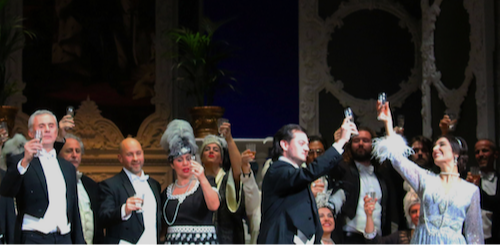
The 2026/2027 season kicks off at Teatro Sociale in Sondrio: 15 dates covering opera, drama, musicals and ballet. It all starts on 2 October with *La Traviata*.
Thu, 24/09/2026