Chiesa della Madonna di Campagna

Ponte In Valtellina

Discover the Church of the Madonna di Campagna in Ponte in Valtellina: origins from the 1500s, works of art, historical organ, frescoes, and architectural details not to be missed.

The Church of the Madonna di Campagna is a small treasure of art and faith, telling centuries of religious history, Lombard art, and popular devotion.
 If you pass through Ponte, it is worth stopping to discover one of the most fascinating places in Valtellina.

📍 Where it is located

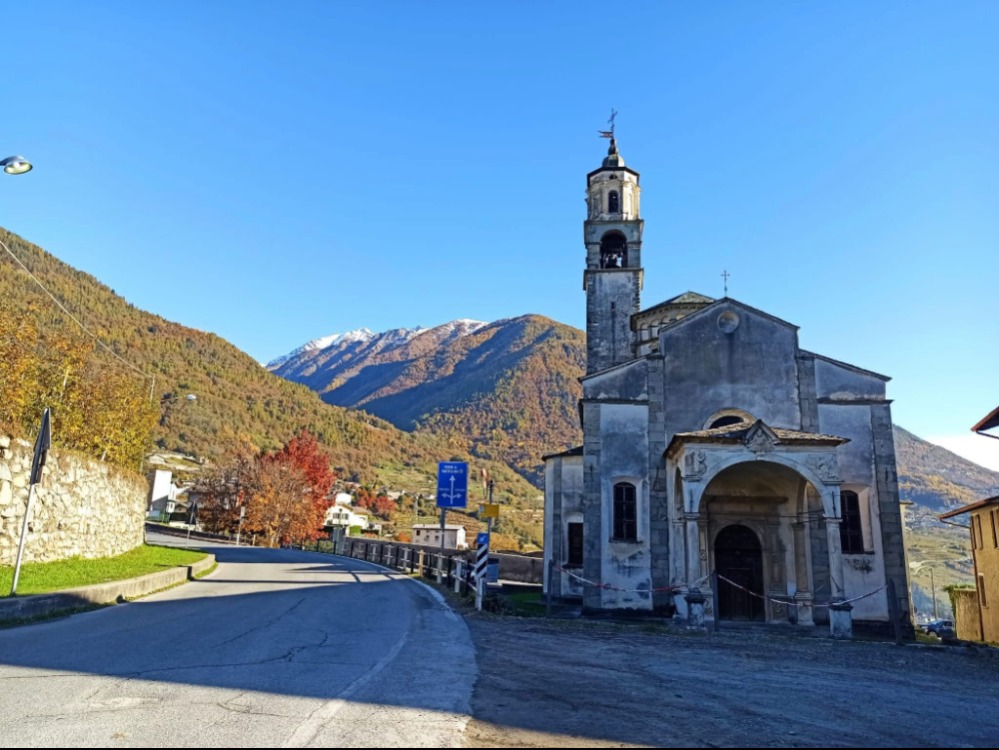
The Church of the Madonna di Campagna is located just outside the center of Ponte in Valtellina, easily reachable on foot. It faces a quiet position among meadows and vineyards and is one of the most important churches in the village for its history and artistic heritage.

📖 The origins

The church was built in the 16th century on an ancient chapel dedicated to the Virgin. It was consecrated in 1593 by the Bishop of Como, Feliciano Ninguarda. The bell tower, with a closed shaft, was completed in 1581 and is topped by a Baroque niche.

🏛️ The exterior: portal, pronaos, and façade

The white marble pronaos, dated 1593, leads to a portal decorated with high reliefs: in the center, the Eternal Father and on the sides, figures of the Annunciation.
 On the pillars, there are two tondi with prophets, and above, flying angels playing trumpets.
 The wooden door, carved in 1690 by Baldassarre Zucco, is rich in ornamental motifs: garlands, fruit festoons, volutes, and a central grotesque mask.
🏛️ The interior: three naves and "wave" flooring

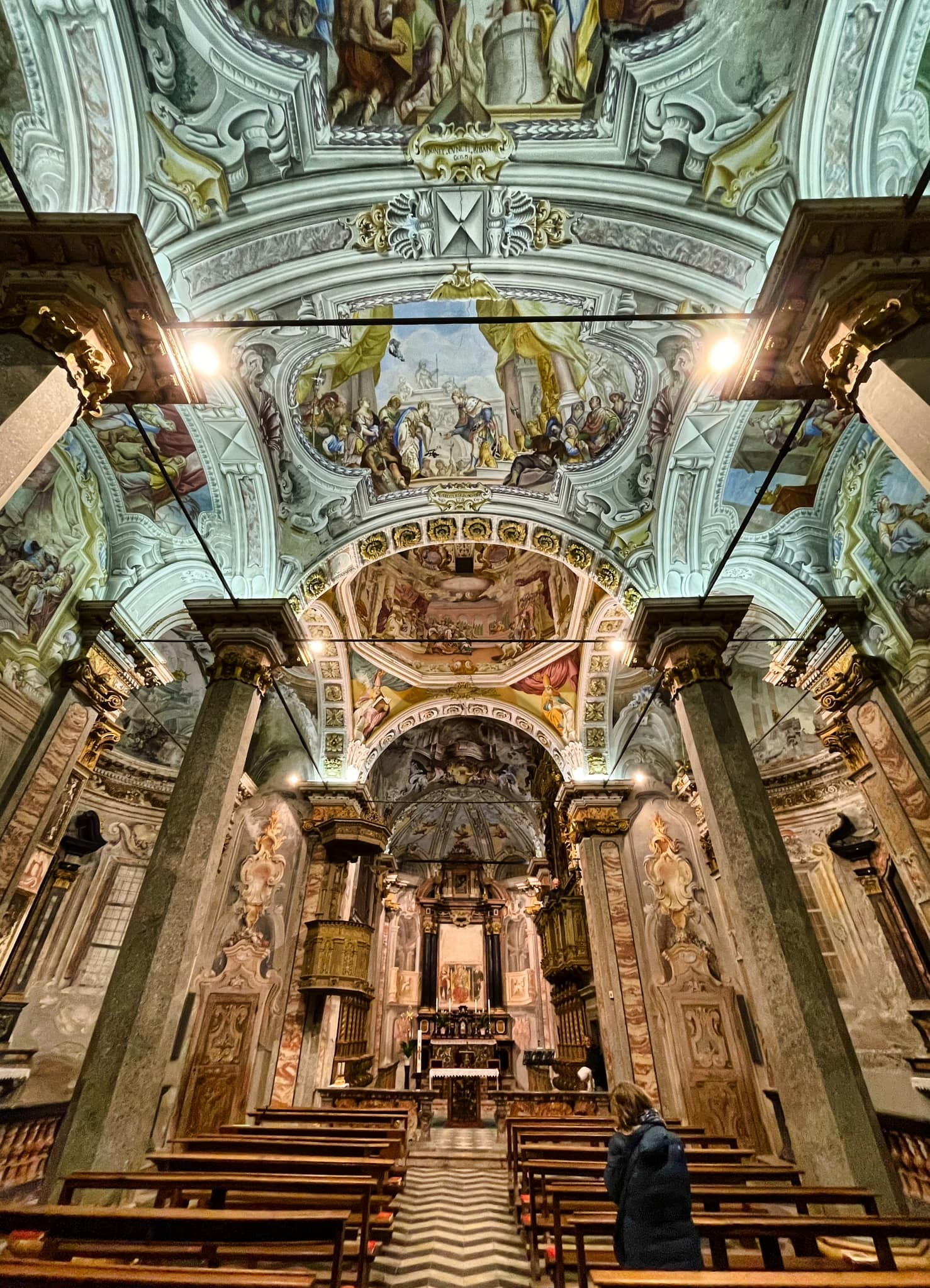
The interior is divided into three naves by hexagonal columns clad in scagliola.
 The black and white marble floor creates an optical effect of "sea waves".
 Also notable are the wooden confessionals by Andrea Rinaldi (1775), featuring geometric inlays and a shaped cornice.

🖼️ The side chapels

  • Right chapel (Assumption)
     Decorated by Giuseppe Coduri known as Vignoli, it features fake stuccos, a frescoed dome, and a lantern.
     The altar hosts a painting of the Assumption, a reproduction of the work by Gaetano Gandolfi (1773).
  • Left chapel (Saint Stephen)
     Painted by Giuseppe Porro, it displays a fake balustrade with columns and monochrome landscapes.
     There are four stories of the Saint and four allegories of virtues, today partially deteriorated.

    🎨 Frescoes: Marian symbols and female figures
  • Dome: work by Giambattista Muttoni, depicting episodes from the Old Testament and Marian symbols.
     Above, the Assumed one among angels and the four Doctors of the Church.
  • Naves: frescoes by Giuseppe Prina (1718-1719), featuring biblical stories on female themes:
    • Moses saved by the Pharaoh's daughter
    • Judith and Holofernes
    • Rebecca at the well
    • Deborah, Jael, Ruth, Bathsheba, and others
    • On the counter facade: Blaam, Moses, Solomon, and David

Photo: Carlo Brigatti

🎼 The historical organ

The organ is among the oldest in Lombardy.

  • Built by Antonio Bizarri in 1518, moved here in 1657
  • Restored by Antegnati in 1589
  • Renewed by Carlo Prata in the 17th century
  • Baroque case with telamones, statues, and small columns
  • Restored in the 1990s by the Fratti company, it is now used for concerts

On the front, a painting of the Immaculate Conception by Giovanni Maria Piazzi (1678), with the Virgin among angel musicians.

🕍 Presbytery and main altar

  • Choral stalls carved and painted
  • Architectural frescoes and stuccoes by Bernardo Bianchi (1619)
  • Carved pulpit with amphorae and fruit and grape ornaments
  • Baldachin with perforations and pinnacles

On the main altar, there is a devotional fresco from the 15th century:

  • Madonna on the throne with Child, between Saint Anthony Abbot and Saint Maurice
  • This painting was greatly revered over time for alleged miraculous interventions

ℹ️ Useful information for the visit

  • 🕒 Hours: openings on the occasion of religious events, holidays, and concerts
  • 🎵 Events: organ concerts and cultural events throughout the year
  • 📍 Where to find it: a few minutes' walk from the center of Ponte in Valtellina
  • 🚗 Parking: available nearby
  • 📞 Contacts: for guided tours or extraordinary openings, contact the Parish of Ponte in Valtellina: 0342 48222

🏘️ Scopri il comune di Ponte In Valtellina

Diverse le interpretazioni sull'origine del nome: secondo alcuni occorre far riferimento ad un ponte sull'Adda strategicamente importante; altri sostengono che un attraversamento obbligato si sarebbe invece trovato sul torrente Ron; altri ancora citano il romano Pontum e, infine, una diffusa spiegazione ricorre al longobardo "biunte". Certamente abitato in epoca romana, risulta dai documenti che il borgo assunse fisionomia autonoma dopo l'anno 1000, periodo in cui importanti nuclei familiari vi immigrarono da Como. Tra essi le famiglie Quadrio, sotto il cui controllo il prestigio di Ponte andò progressivamente accrescendosi e rafforzandosi.

VAI AL COMUNE

Esperienze da vivere a Ponte In Valtellina

Come arrivare a Chiesa della Madonna di Campagna