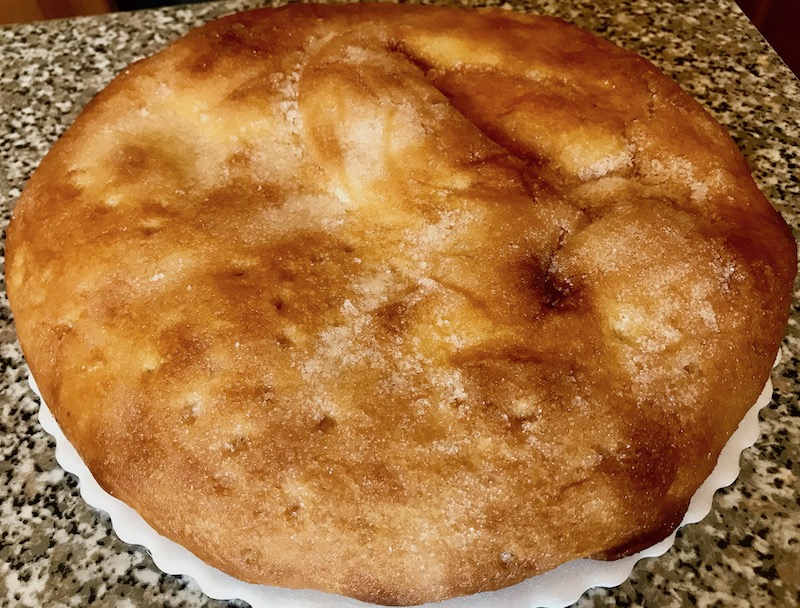
Fioretto Cake (Fügascia de Fiorétt) 🌼 – Traditional Sweet from Valchiavenna with Anise
An ancient scent that conquers at the first bite: the typical Valchiavenna cake to try at least once in your life! ✨
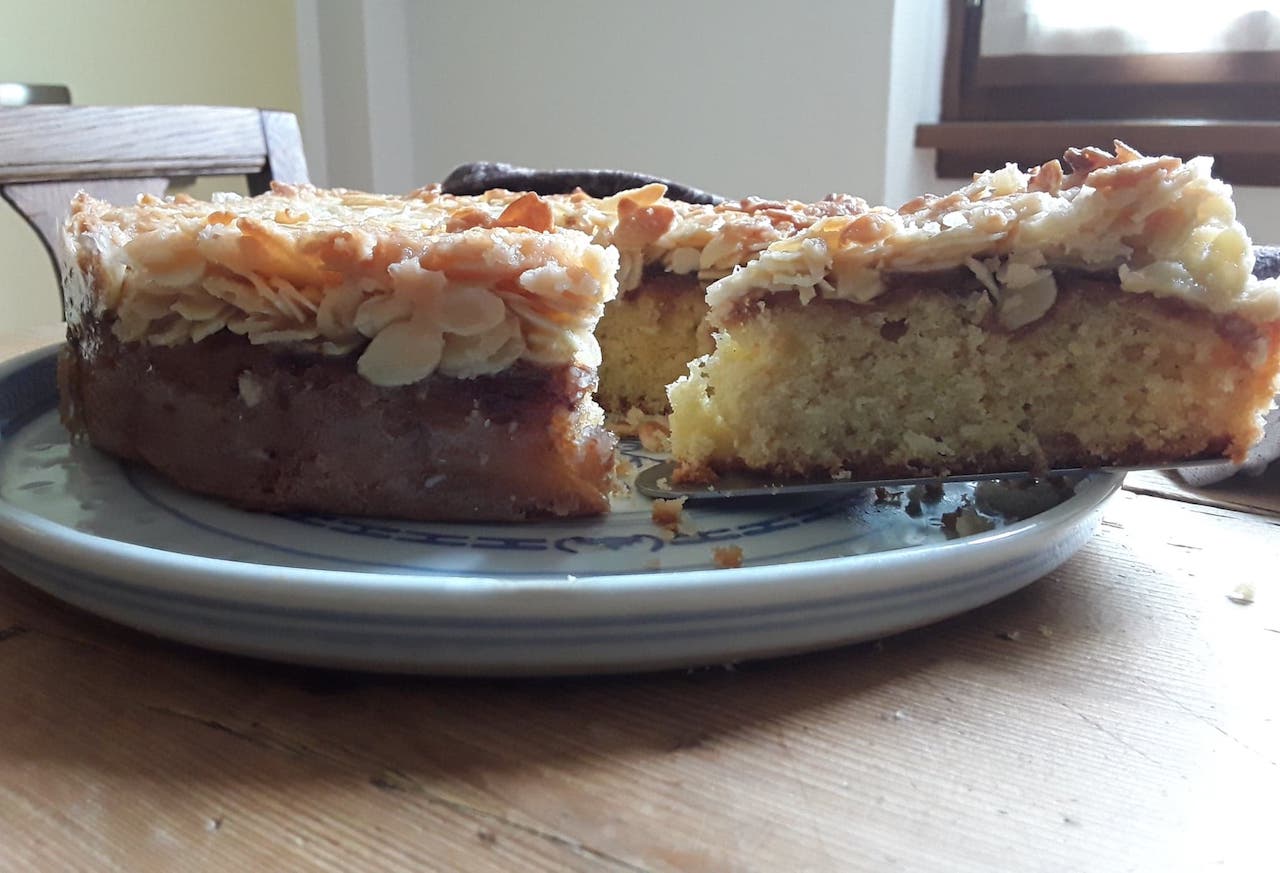
The Fioretto Cake, called in dialect “Fügascia de Fiorétt”, is the sweet symbol of Valchiavenna, in Lombardy. It is a sweet focaccia, fragrant and rich, characterized by the unmistakable flavor of dry anise flowers, the “fioretto”, which gives it its name. Originally, it was a poor preparation made with bread dough, but today it has become a real baked dessert, fragrant and soft. If you love rustic and genuine flavors, you can't miss it! 🌾🍰
📝 Ingredients
- 1 kg of white flour
- 40 g of fresh brewer's yeast
- 200 g of sugar
- 400 g of butter
- 10 egg yolks
- 10 g of salt
- Sugar to taste (for finishing)
- Fioretto (dry anise flowers) to taste
👩🍳 Step-by-step Preparation
👉 Phase 1 – Pre-dough
- Mix 200 g of flour with the brewer's yeast and a bit of water (just enough to obtain a soft dough).
- Let it rest covered until it doubles in volume.
👉 Phase 2 – Main Dough
- In a large bowl, mix the remaining 800 g of flour with 200 g of sugar, 400 g of soft butter cut into pieces, 10 yolks, and 10 g of salt.
- You will obtain a soft and rich dough.
- Add the dough from Phase 1 and knead everything well until fully combined.
👉 Leavening
- Roll out the dough in a large baking tray lined with parchment paper or well-buttered.
- Let it rise for 30 minutes at 20°C in a sheltered place.
👉 Baking
- Once risen, sprinkle the surface with sugar and a generous amount of fioretto (anise flowers).
- Bake in a preheated oven at 220°C for about 20 minutes, until golden.
👉 Finishing
- Once baked, melt some butter in a small saucepan and pour it hot over the surface of the cake to make it even more tempting and shiny.
💡 Traditional tips:
- Fioretto can be found in herbal shops or local product stores.
- Serve it for breakfast or with a little glass of herbal liqueur for a perfect mountain snack!
📸 The image of the dishes is purely indicative and does not necessarily correspond precisely to the recipe