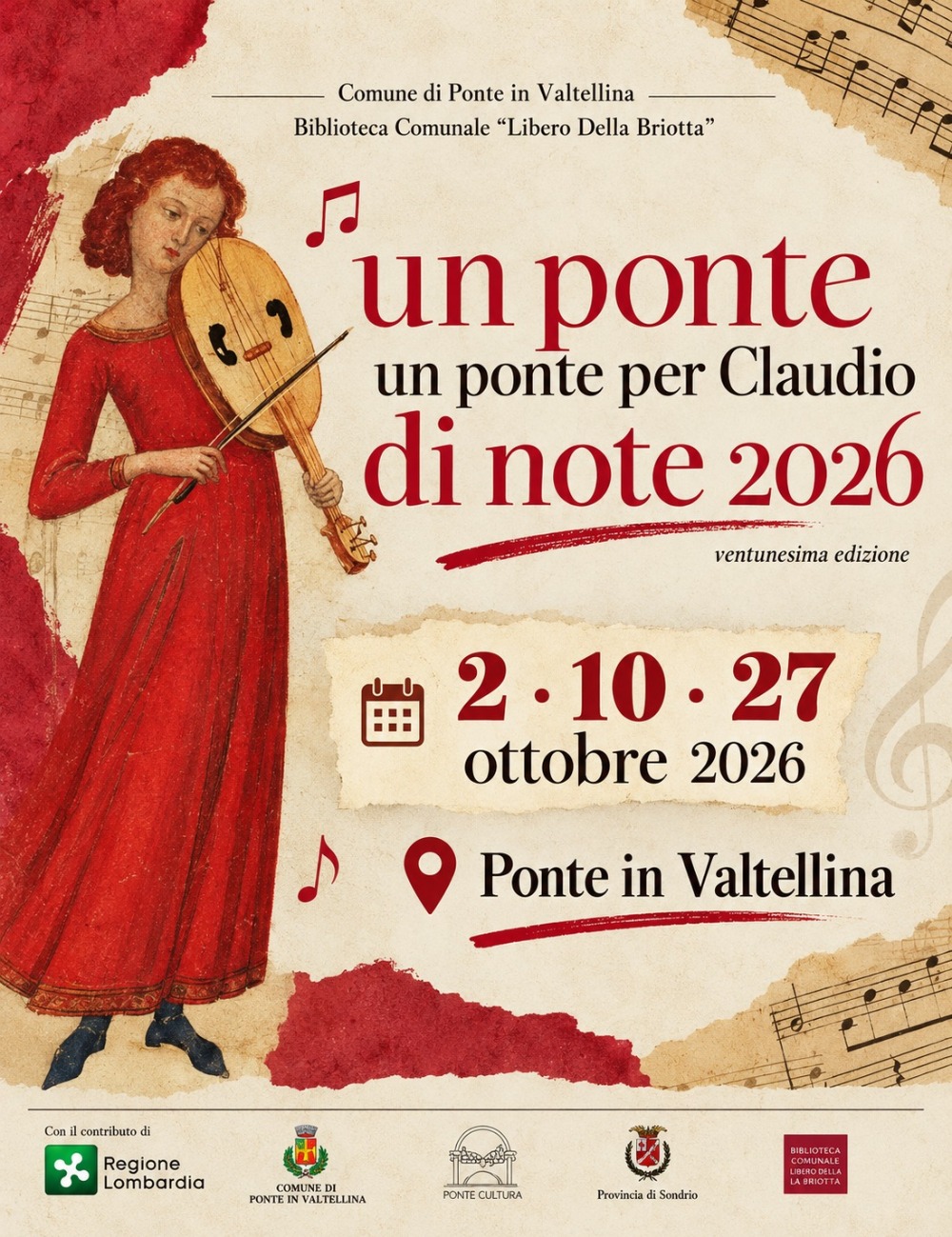
Un ponte di note
Culture, Music and Entertainment
From 27 September to 10 October 2026, in Ponte in Valtellina (SO), Un Ponte di Note – Un ponte per Claudio returns for its twenty-first edition.
The event, organised by the Municipality of Ponte in Valtellina and the municipal library “Libero Della Briotta”, with the artistic direction of maestro Natale Peruzio, features three concerts and the presentation of a volume dedicated to local artistic heritage.
Guitar, organ, violin and dulciana accompany a journey through different authors and eras, ranging from memories of Hans Werner Henze, to Arcimboldo’s world, and five centuries of music for organ.
The programme
Sunday 27 September – 6.30 pm
Teatro Comunale Giuseppe Piazzi
A tribute to Hans Werner Henze on the centenary of his birth (1926–2026), with Stefano Grondona, guitar, and Laura Mondello, guitar and guest artist. Music by Froberger, Scarlatti, Granados, Mendelssohn, Llobet and Henze. Booking is appreciated for this event.
Friday 2 October – 9.00 pm
Chiesa della Madonna di Campagna
Ut Pictura Musica. L’Arcimboldo between Milan and the court of Prague 1526–2026, with Maurizio Croci, organ, Plamena Nikitassova, violin, and Carles Cristóbal, dulciana. Music by Boyleau, De Cabezón, Rognoni, De Monte, Hassler and Cima.
Sunday 4 October – 5.00 pm
Chiesa di San Maurizio
Presentation of the volume I fratelli Innocenzo e Francesco Guicciardi del Brianzo e il ciborio della chiesa di San Maurizio a Ponte in Valtellina, by Francesco Palazzi Trivelli, with contributions from Simonetta Coppa, Augusta Corbellini and Battista Rinaldi. Augusta Corbellini and Battista Rinaldi will also take part. Appointment curated by the Società storica valtellinese.
Saturday 10 October – 9.00 pm
Chiesa della Madonna di Campagna
The voice of the Bizzarri organ (1518) across five centuries of music, with Maurizio Salerno on the organ. Music by Cavazzoni, Pasquini, Storace, Frescobaldi, Froberger and Bach.
Useful information
- When: from 27 September to 10 October 2026,
- Where: Teatro Comunale Giuseppe Piazzi, Chiesa della Madonna di Campagna and Chiesa di San Maurizio, in Ponte in Valtellina (SO).
- Admission: free with donations.
- Booking: booking is recommended for the 27 September concert.
For information: natruzio@gmail.com / francesca.bormetti67@gmail.com
📍 Things to see nearby
Se vuoi scoprire di più su questa zona, qui trovi altri spunti utili.

Church of the Most Holy Trinity
Ponte In Valtellina
Palazzo Guicciardi
Ponte In Valtellina
Casa Piazzi – Palazzo Cederna
Ponte In Valtellina
Casa Quadrio
Ponte In Valtellina
Ethnographic Museum
Ponte In Valtellina
Church of Our Lady of Good Counsel
Ponte In Valtellina
Santuario di San Luigi di Sazzo
Ponte In Valtellina
Il "Murunè"
Ponte In Valtellina
Saint Maurice Church
Ponte In Valtellina
Palazzo Piazzi Giacomoni
Ponte In Valtellina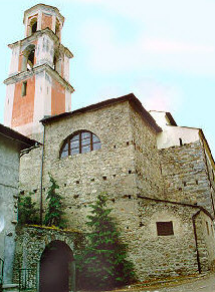
The church of Sant'Ignazio
Ponte In Valtellina
Casa Guicciardi
Ponte In Valtellina
Museo Parrocchiale
Ponte In Valtellina
The church of San Matteo
Ponte In Valtellina
Roseto del Drago
Ponte In Valtellina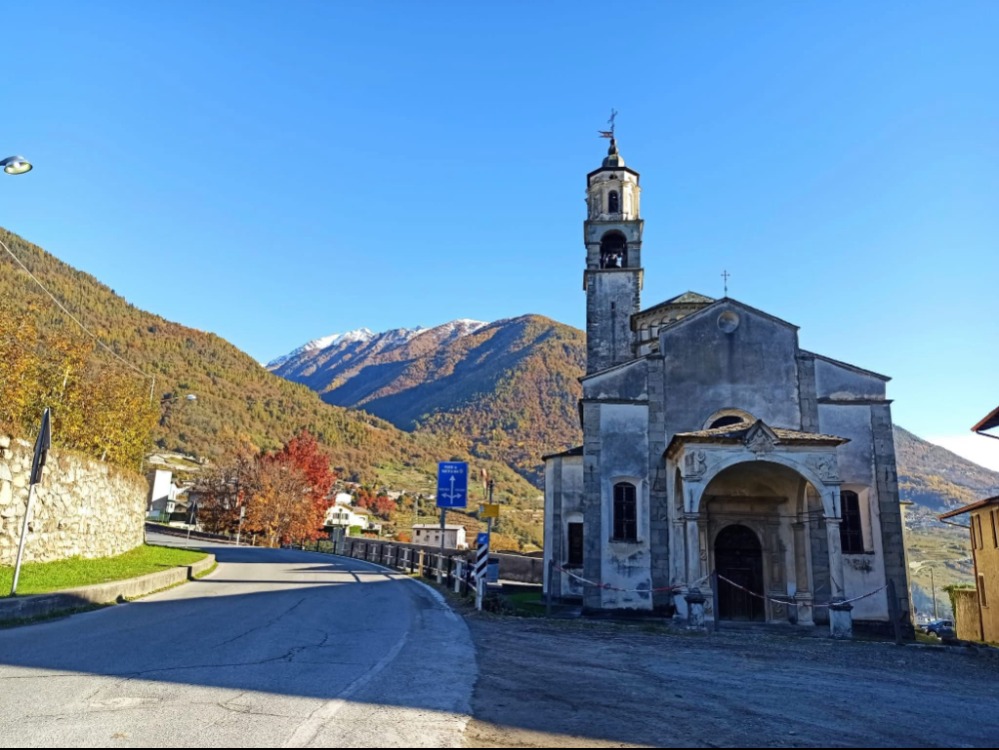
Chiesa della Madonna di Campagna
Ponte In Valtellina🏘️ Discover the municipality of Ponte In Valtellina
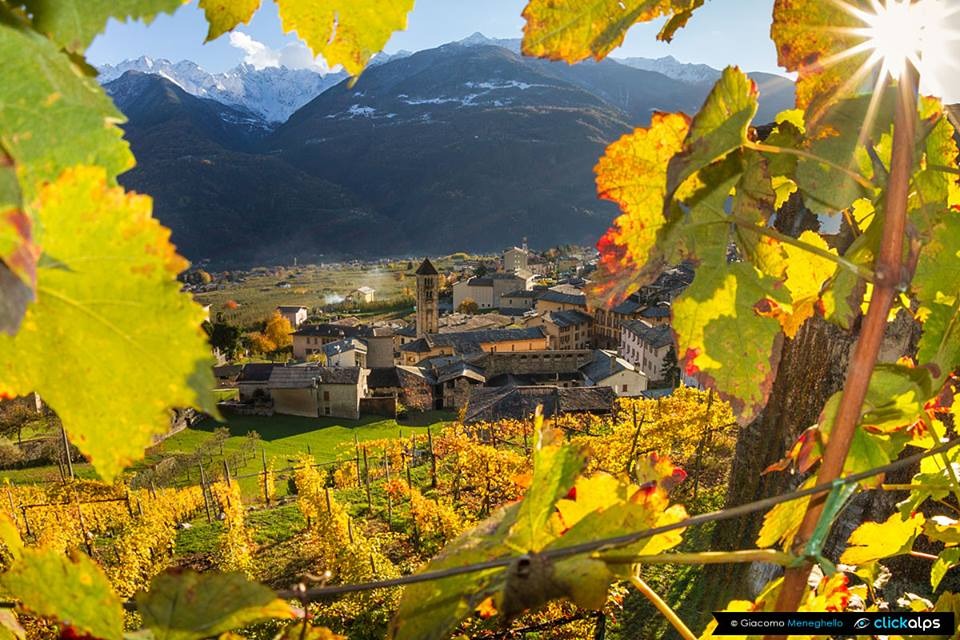
Diverse le interpretazioni sull'origine del nome: secondo alcuni occorre far riferimento ad un ponte sull'Adda strategicamente importante; altri sostengono che un attraversamento obbligato si sarebbe invece trovato sul torrente Ron; altri ancora citano il romano Pontum e, infine, una diffusa spiegazione ricorre al longobardo "biunte". Certamente abitato in epoca romana, risulta dai documenti che il borgo assunse fisionomia autonoma dopo l'anno 1000, periodo in cui importanti nuclei familiari vi immigrarono da Como. Tra essi le famiglie Quadrio, sotto il cui controllo il prestigio di Ponte andò progressivamente accrescendosi e rafforzandosi.
 VAI AL COMUNE


